Last updated November 21, 2026
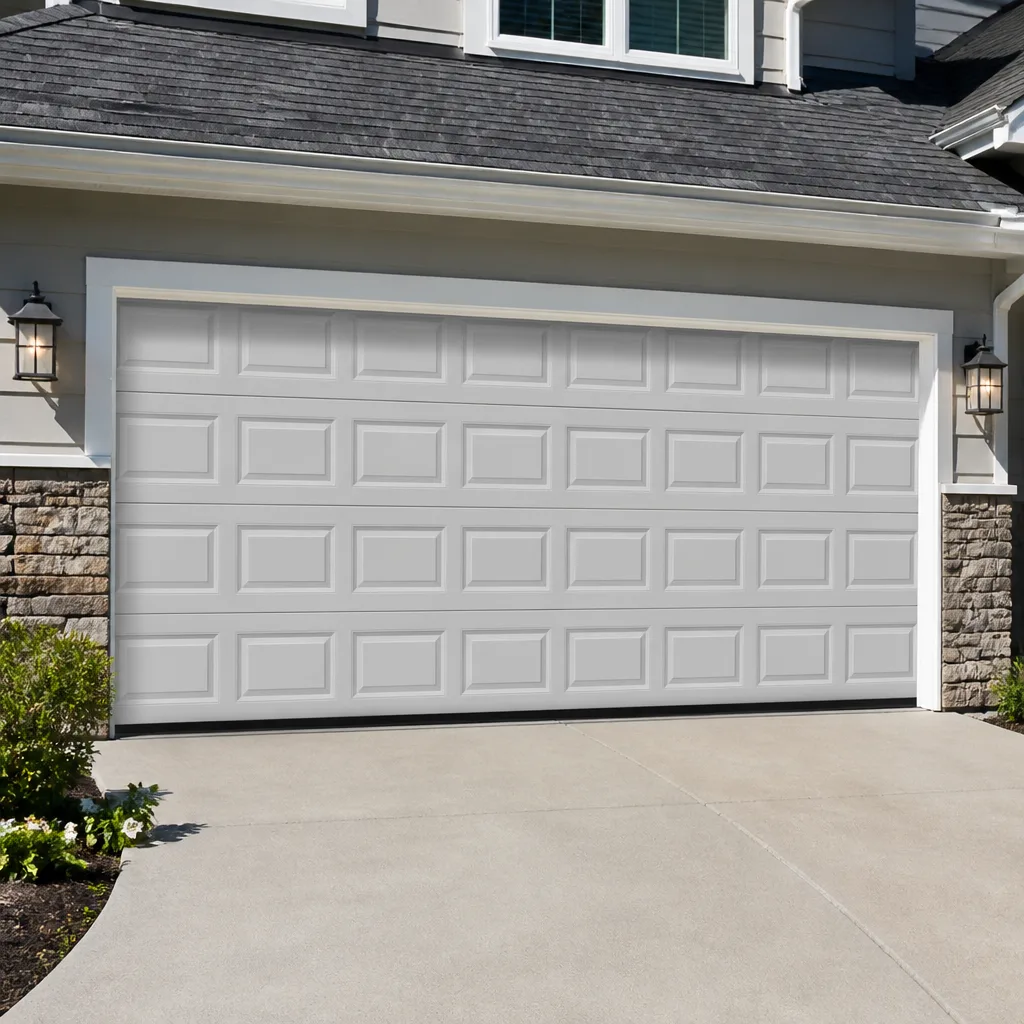 Raised-panel steel
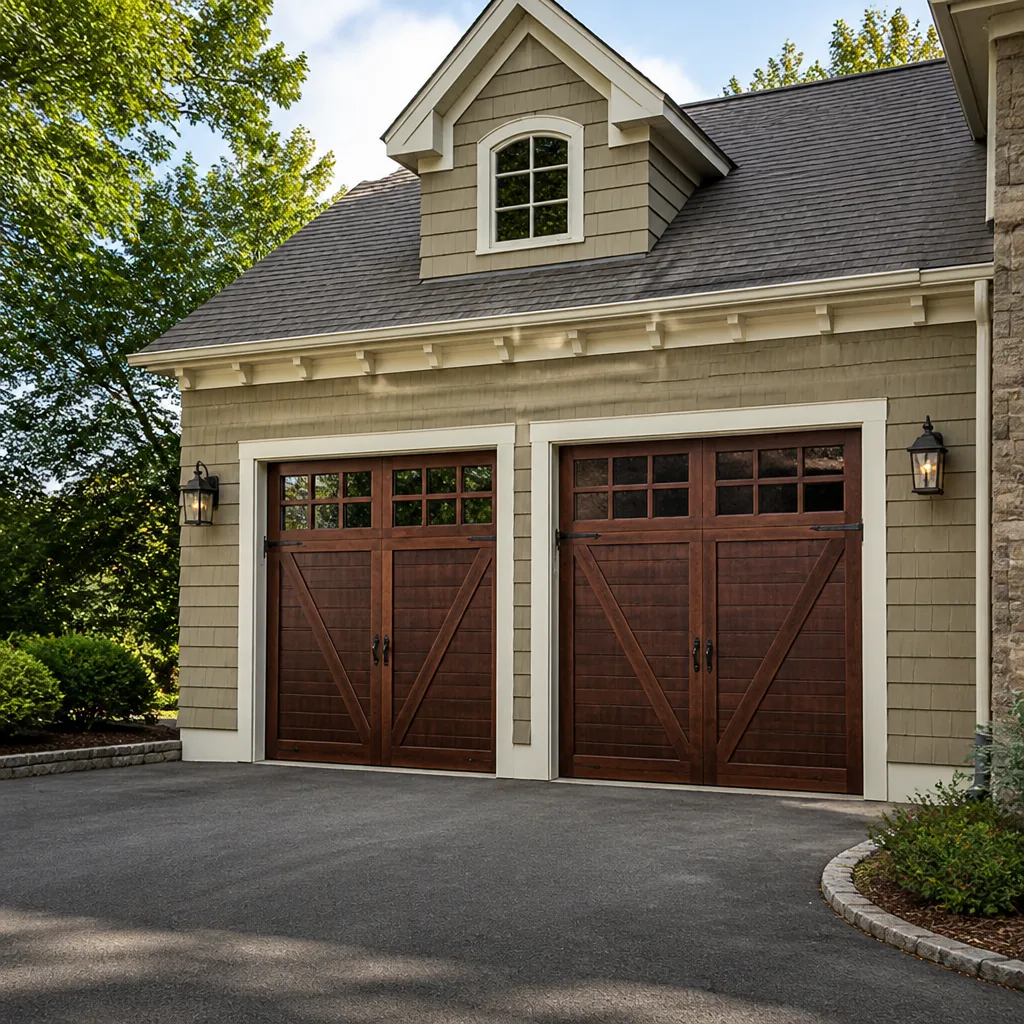 Carriage house
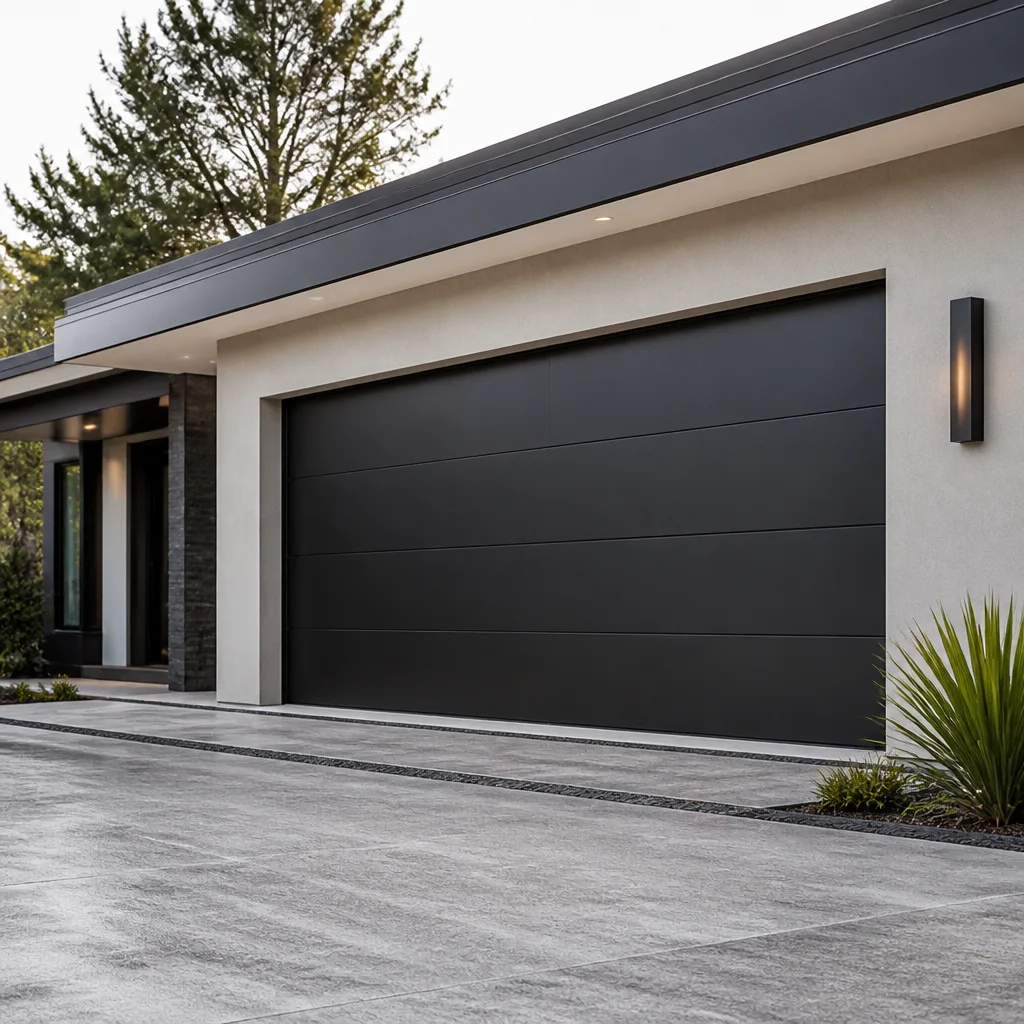 Modern flush
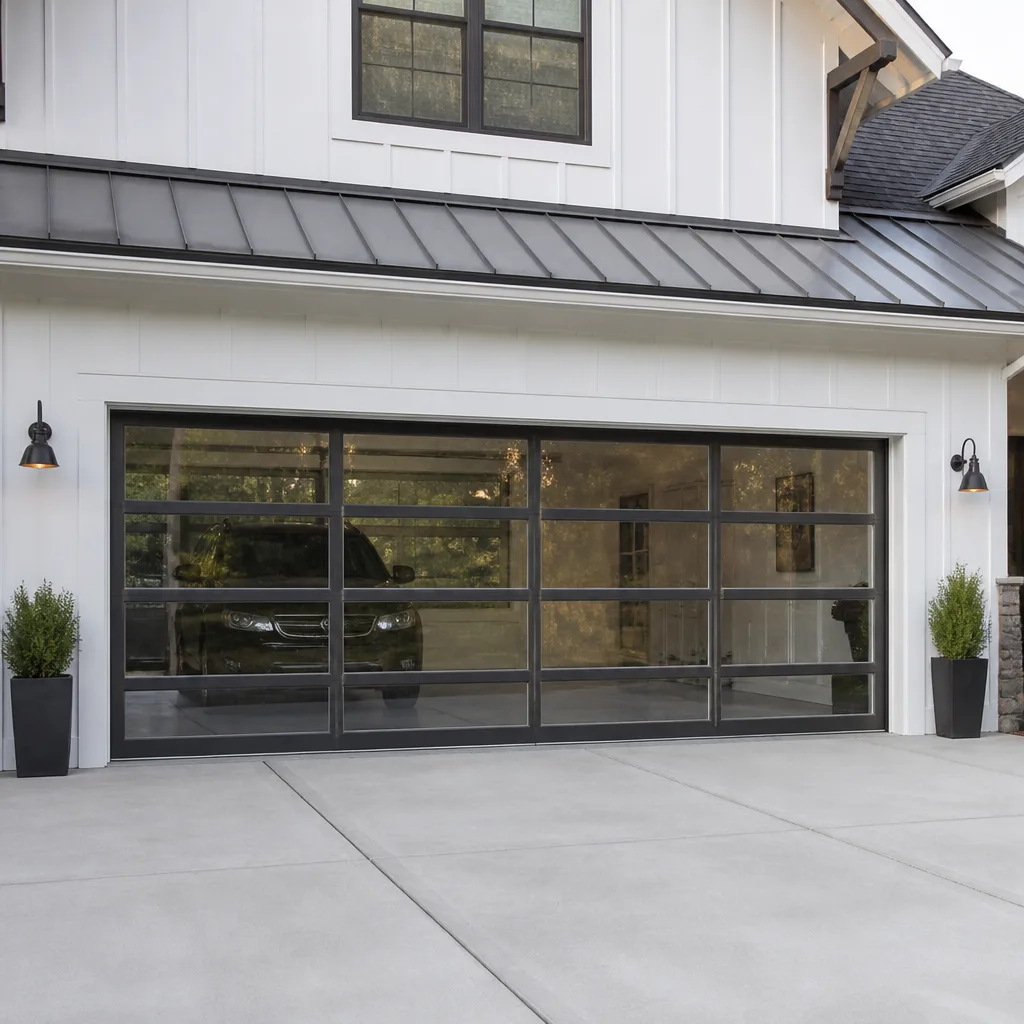 Full-view glass
 LiftMaster openers
 Chamberlain openers
Full 25-point door and opener safety check with every visit - springs, cables, rollers, tracks, and your LiftMaster or Chamberlain opener included
You get a price before we start. It does not change when the pro arrives.
Get your free estimateDIY vs Professional Garage Door: The Hampden Homeowner’s Decision Guide
Most garage door advice starts in the wrong place. It asks whether you’re handy enough to fix the door yourself. The better question is what happens if you get it wrong. A torsion spring under load holds a force that can seriously injure an experienced technician who misjudges it, and that changes the math completely. Some garage door jobs are genuinely safe for a careful homeowner with a stepladder and an afternoon. Others are professional-only no matter how many projects you’ve finished in your own house.
This guide sorts garage door work by risk, not by skill level. We’ll walk through what you can safely do in a Hampden garage, what’s tempting but genuinely dangerous, and where the money you save doing it yourself gets eaten by the repair that follows. By the end you’ll know which calls to make yourself and which to hand to a technician.
Quick Answer
Safe DIY garage door work in Hampden is limited to lubrication, sensor alignment, remote reprogramming, and visual inspections. Anything involving torsion springs, cables, bottom brackets, or the door’s balance is professional-only because those parts store lethal energy. Panel replacement, opener motor work, and full door installation fall in a middle zone where the risk is lower but the tools and know-how usually aren’t worth the savings.
Styles & brands we work with
- Raised-panel steel
- Carriage house
- Modern flush
- Full-view glass
- LiftMaster openers
- Chamberlain openers
Table of Contents
- The Garage Door Risk Matrix: What’s Safe, Risky, and Professional-Only
- Why Torsion Springs Are the One Job You Never DIY
- Safe DIY Garage Door Maintenance for Hampden Homeowners
- The Middle Zone: DIY-Possible Jobs That Usually Backfire
- The Tools You Actually Need (and What a Technician Carries)
- How Botched DIY Repairs Raise Your Future Repair Costs
- What’s Different About Garage Doors in Hampden
- When to Call a Professional
The Garage Door Risk Matrix: What’s Safe, Risky, and Professional-Only
A garage door isn’t a single system. It’s a collection of springs, cables, rollers, hinges, tracks, panels, and an opener, and each of those parts fails in its own way. The risk of working on the door depends almost entirely on which part you’re touching and whether it’s under tension. Sort every garage door task into one of three buckets and the DIY decision gets much simpler.
Tier 1: Safe for a Careful Homeowner
- Lubricating hinges, rollers, and the torsion bar with a garage door lubricant
- Aligning or cleaning the safety sensors near the floor
- Reprogramming remotes and keypads
- Testing the auto-reverse safety feature with a small object
- Cleaning panels, tracks, and weatherstripping
- Tightening exposed hinge bolts and roller brackets by hand
- Replacing the light bulb in the opener housing
None of these put your hands near stored spring tension. A homeowner with basic care and a stepladder can handle all of them.
Tier 2: DIY-Possible but Risky
- Replacing a single roller or hinge (small parts, but you’re still working on a door that could drop)
- Swapping out a bottom seal or weatherstripping (easy, but the door needs to be up, and you’re working under it)
- Replacing a panel on a sectional door (alignment matters, and a misaligned panel can bind the track)
- Resetting a disconnected opener trolley after a manual release
- Replacing a wall-mounted opener button or safety sensor wiring
These are doable if you understand the system. They’re also the jobs where we see the most “I almost finished, now the door won’t close” calls in Hampden.
Tier 3: Professional-Only, Regardless of Skill
- Torsion spring replacement or adjustment
- Extension spring replacement or adjustment
- Cable replacement (cables are under spring tension)
- Bottom bracket replacement (the bracket holds the cable under tension)
- Track straightening or realignment after a bend
- Balancing the door’s spring tension
- Full door installation or replacement
Tier 3 work has one thing in common: stored energy that doesn’t announce itself. A torsion spring under load is holding a force that can throw a winding bar or snap a cable with no warning. That’s not a matter of being handy. It’s a matter of what the physics does when something slips.
Why Torsion Springs Are the One Job You Never DIY
A torsion spring holds roughly the same stored energy as a loaded crossbow. That’s the simplest way to explain it. To lift a 150-pound door, the spring has to be wound with enough tension to counter most of the door’s weight, and that tension is present every moment the spring is installed. You don’t see it because the spring looks like a coiled bar above the door. You feel it the second you touch a winding cone.
Here’s what that actually means in practice. A technician winds a torsion spring using two steel winding bars inserted into the cone, and the bars are the only thing between the spring’s stored energy and their hands. If a bar slips, or a set screw fails, or the spring snaps while it’s being adjusted, the stored energy releases instantly. Experienced mechanics have been seriously injured in that exact scenario. That’s why spring repair is one of the most commonly outsourced garage door jobs in the trade, and why the risk profile for a homeowner is much higher than it looks from a YouTube video.
Extension springs are a different mechanism but the same reality. They stretch along the track above the door, and when one snaps under load, it can whip with enough force to dent the door panel or worse. Older Hampden homes with extension springs are especially worth inspecting, since those springs often lack the containment cables newer doors are required to have.
None of this is meant to scare you off maintenance. It’s meant to let you make an informed call. If the work requires unbolting a spring, unwinding a spring, cutting a cable, or removing a bottom bracket, put the tools down. That’s the line. We work on springs every week, and we still handle them like a loaded mechanism because that’s what they are.
Safe DIY Garage Door Maintenance for Hampden Homeowners
The best money you can save on garage door work doesn’t come from a risky repair. It comes from regular maintenance you can do yourself in Hampden, because small fixes early prevent large repairs later. A garage door needs lubrication, alignment, and occasional adjustments, and none of those require you to touch a spring.
Step-by-Step: A Monthly Garage Door Maintenance Routine
- Inspect from a distance. Close the door and look at the gaps along the sides and bottom. Even gaps mean the tracks are still aligned. Uneven gaps or a door that looks crooked are a sign the springs or cables have shifted.
- Test the balance. Pull the manual release to disconnect the opener, lift the door halfway by hand, and let go. A properly balanced door stays put. One that slams down or drifts up needs professional attention.
- Lubricate the moving parts. Use a garage door lubricant (not WD-40) on the hinges, rollers, and torsion bar. Wipe up any excess so it doesn’t collect grit.
- Check the safety sensors. Press the wall button to close the door, then wave an object through the sensor beam near the floor. The door should reverse immediately. If it doesn’t, realign the sensors until the indicator lights stay solid.
- Test the auto-reverse. Place a roll of paper towels or a 2×4 flat on the ground under the door and close it. The door should reverse on contact. If it doesn’t, stop using the opener and get it checked.
- Clean the tracks. Wipe the inside of the tracks with a dry cloth. Don’t grease the tracks. They’re designed to run dry and grease traps grit.
- Inspect the weatherstripping. Check the bottom seal and the frame seals around the door. Worn seals let in drafts and pests, and replacing a bottom seal is a genuinely safe DIY job.
Step-by-Step: Reprogramming a Remote
- Locate the “learn” button on the opener motor, usually under a light cover on the back or side of the unit.
- Press the learn button once and release. The indicator light will come on.
- Within about 30 seconds, press and hold the remote button you want to program.
- Release when the opener clicks or the light blinks. Test the remote to confirm.
Modern openers from LiftMaster, Chamberlain, and Genie use rolling codes, so a neighbor’s remote won’t work on your door even if it’s the same brand. That’s the main reason reprogramming is worth doing yourself rather than replacing an opener that’s fine.
If your door fails the balance test or the auto-reverse test, stop using the opener and get it inspected. Those failures point to spring, cable, or opener problems that aren’t safe to chase on your own. For the opener side of that work specifically, a look at garage door opener repair gives you a sense of what’s involved.
The Middle Zone: DIY-Possible Jobs That Usually Backfire
Between the safe jobs and the professional-only work sits a middle tier that trips up a lot of homeowners. These jobs don’t require winding a spring, so they look manageable. And in some cases they are. But they need enough of the same tools and the same understanding of how the door balances that the savings rarely match the risk.
Roller Replacement
Replacing a single roller is a ten-minute job in theory. In practice, you’re working on a door held up by springs under load, and if the door is out of balance, releasing tension on one side can send it out of the track. It’s doable, but a technician can replace all the rollers in the time it takes a homeowner to safely replace one.
Panel Replacement
A single damaged panel can often be replaced without touching the springs, which makes it tempting. The challenge is alignment. Panels have to seat squarely, or the hinges bind, the door drags, and the opener strains. Misaligned panels are one of the most common calls we get in Hampden after a homeowner tried a swap. Doors from Clopay, Amarr, and Wayne Dalton each have their own panel-matching quirks, and a mismatched panel will never sit or seal correctly.
Track Realignment
A bent track looks like it just needs to be pushed back into place. But a bent track usually means the door is out of balance or a roller has failed, and forcing the track back without fixing the cause will just bend it again. Worse, if the track fails completely, the door can drop. Track work is one of those jobs where the door needs to be in a safe, supported position to work on, and that’s not a position a homeowner can easily create without spring tools.
Opener Motor and Gear Replacement
Opening the opener housing to replace a gear or a drive belt is technically possible. It’s also where wiring, capacitors, and the door’s balance all come together. If you’ve ever worked on a car engine and felt comfortable, you might manage. Most homeowners don’t, and that’s fine. The opener side of the system has its own risks, especially on older units with capacitors that hold a charge.
This is the tier where the honest answer is: DIY saves less than you’d think. The parts are inexpensive, the tools aren’t free, and the failure mode costs more to undo than to have avoided. If any of these are what’s actually broken, save the toolkit for lubrication and let a technician handle the rest.
The Tools You Actually Need (and What a Technician Carries)
One of the clearest tells about whether a garage door job is DIY-appropriate is the tool list. If the job requires two winding bars, a tension gauge, and a way to support a door that’s been disconnected from its opener, it’s not a homeowner job. That’s the whole test. A task that only needs a wrench, a screwdriver, and a stepladder is a task you can safely take on.
Tools for Safe Hampden DIY Work
- A stepladder tall enough to reach the torsion bar and opener housing
- A socket set and screwdriver set for hinge bolts and sensor brackets
- Garage door lubricant (a spray can specifically labeled for garage doors)
- A small level for sensor alignment
- A dry cloth for cleaning tracks
- A flashlight for inspecting cables and springs
- A roll of paper towels or a 2×4 for the auto-reverse test
That’s the whole safe toolkit. Everything here costs less than a single service call, and none of it puts your hands near stored energy.
What a Technician Brings Beyond That
- Two steel winding bars for torsion spring work
- A spring tension gauge and calibration tools
- Door support stands and locking pliers to hold a door in a safe position
- Cable clamps and crimpers
- Spare rollers, hinges, and panel brackets for the common brands
- Diagnostic tools for openers, including remote testing
- Drive belt and gear replacement tools for the major opener models
The wrench you can buy at any hardware store. The winding bars and door support equipment are the tools that make spring work safe, and they’re not something a homeowner needs to own. That gap is the honest boundary between “DIY-friendly” and “hire a pro.”
How Botched DIY Repairs Raise Your Future Repair Costs
A failed DIY repair doesn’t just cost you the time. It can cost more than the original fix would have. When a homeowner tries a spring repair and the spring snaps, the damage often spreads to the cables, the bottom bracket, or the door panels. When a DIY panel swap leaves the door binding, the opener motor strains and eventually fails. The next technician has to untangle someone else’s attempt before getting to the actual job.
In our experience, the most expensive calls are the ones that follow a homeowner’s own effort. A bent track that a homeowner tried to straighten by hand often needs a full track replacement instead of a realignment. A door that’s been driven against a bound roller for a few weeks will wear the opener gears. A spring replaced with the wrong size leaves the door out of balance, which stresses every other component. The cost of a professional garage door repair to undo amateur work is often higher than the original repair would have been because it includes both the correction and the original problem.
The other thing that raises cost is the ambiguity. When a door has been worked on by a homeowner, a technician has to figure out what changed. Which spring, which cable, which panel was touched. That diagnosis time is part of what you’re paying for. A verified single-point repair with clear history is faster and cheaper to service.
What a “Botched DIY” Repair Usually Costs in Hampden
We can’t quote a specific figure for undoing amateur work because it depends entirely on what was damaged and how. But we can tell you what kinds of jobs usually appear in that category and how to think about them:
- Track replacement after failed realignment: usually higher than the original realignment would have been, because the door must be supported and the whole track replaced
- Spring replacement after a snap: can include cable and bottom bracket damage on top of the spring cost
- Opener replacement after DIY gear work: the motor itself is often fine, but the cost to reset the door and re-balance it adds to the total
- Panel replacement after a misaligned swap: the new panel can bend the neighboring hinge and need additional replacement
The pattern is consistent: the professional cost of undoing DIY work tends to be roughly double the cost of the original repair. The savings you were chasing disappear into the correction.
What’s Different About Garage Doors in Hampden
Garage doors fail for the same reasons everywhere, but the specifics of a Hampden home shift which parts fail and when. The area’s mix of older townhomes and mid-century single-family homes means we see a lot of doors that have been in service for years without a maintenance visit, and those doors tend to have original springs, worn rollers, and openers that were installed when the door was new. A door that’s been sitting in a Hampden garage untouched for a decade is running on borrowed time, especially if it’s a Raynor or Wayne Dalton model with the original torsion setup.
Maryland’s freeze-thaw cycle is another factor. Winter temperatures drop below freezing often enough to make springs brittle, and the contraction and expansion of the door and tracks over the seasons loosens bolts and puts extra stress on the bottom seal. A spring that worked fine all summer can snap on the first cold morning of the year. That’s not a Hampden-specific quirk so much as a Mid-Atlantic one, but it’s why we recommend checking the springs before winter rather than waiting for a failure in the middle of a snowstorm.
Hampden’s driveway layouts add their own wrinkle. Narrow driveways with tight clearances mean a door that’s off balance will drag against the tracks more visibly than on a wider setup, and homeowners notice the crooked gap long before they notice the wobble. That’s a useful early warning. A Hampden door that starts looking tilted is usually a door with a spring or cable problem that’s already underway.
Finally, the housing stock matters for what tools you need. Older homes with extension springs need containment cable inspection more often than newer doors with torsion springs. A Hampden homeowner who doesn’t know which type their door has should check before assuming anything about the maintenance routine. If you’re unsure, a quick inspection by a technician settles it in minutes.
Common Mistakes to Avoid
- Trying to adjust a torsion spring to fix a “slow” door. A door that lifts slowly is usually an opener problem, not a spring problem, and touching the spring is the one job best left alone.
- Using WD-40 on the tracks or hinges. WD-40 is a penetrant, not a garage door lubricant. It attracts grit and dries out the moving parts, which makes the next failure worse. Use a dedicated garage door lubricant.
- Greasing the tracks. Tracks are meant to run dry. Grease traps dirt and debris that bind the rollers. Clean the tracks with a dry cloth instead.
- Ignoring a bent track and forcing the door anyway. A bent track is a symptom, not the problem. Pushing the door through it will bend the track further and wear the rollers flat.
- Buying a panel without checking the door’s make and model. Panels from Clopay, Amarr, and Wayne Dalton each fit differently, and a mismatched panel will bind the hinges. Match the model, not just the color.
- Assuming a non-closing door means the opener is dead. Nine times out of ten the issue is a misaligned safety sensor or a blocked beam. Check the sensor lights before replacing the opener.
- Running the door on one spring. If a torsion pair snaps one side, the remaining spring is doing twice the work and will fail faster. A matched pair should be replaced together.
See the difference
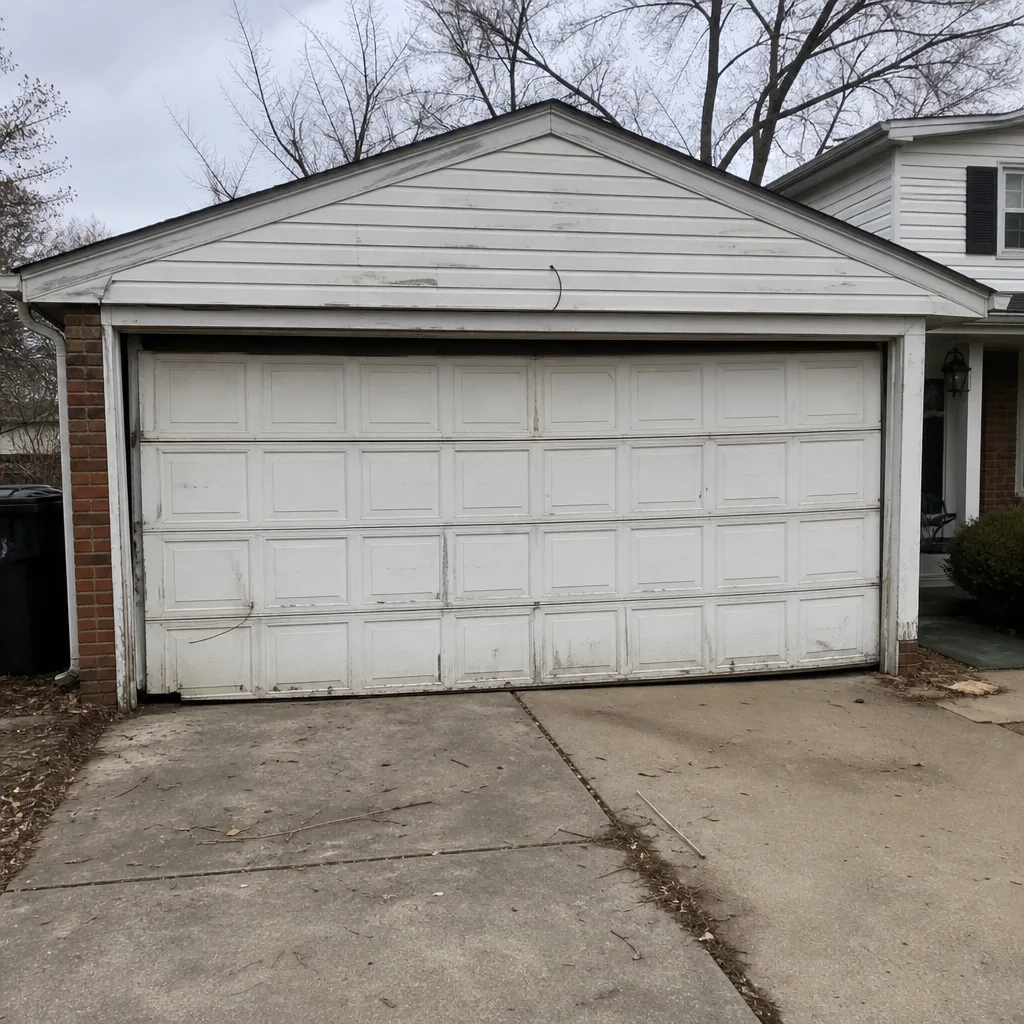 Before
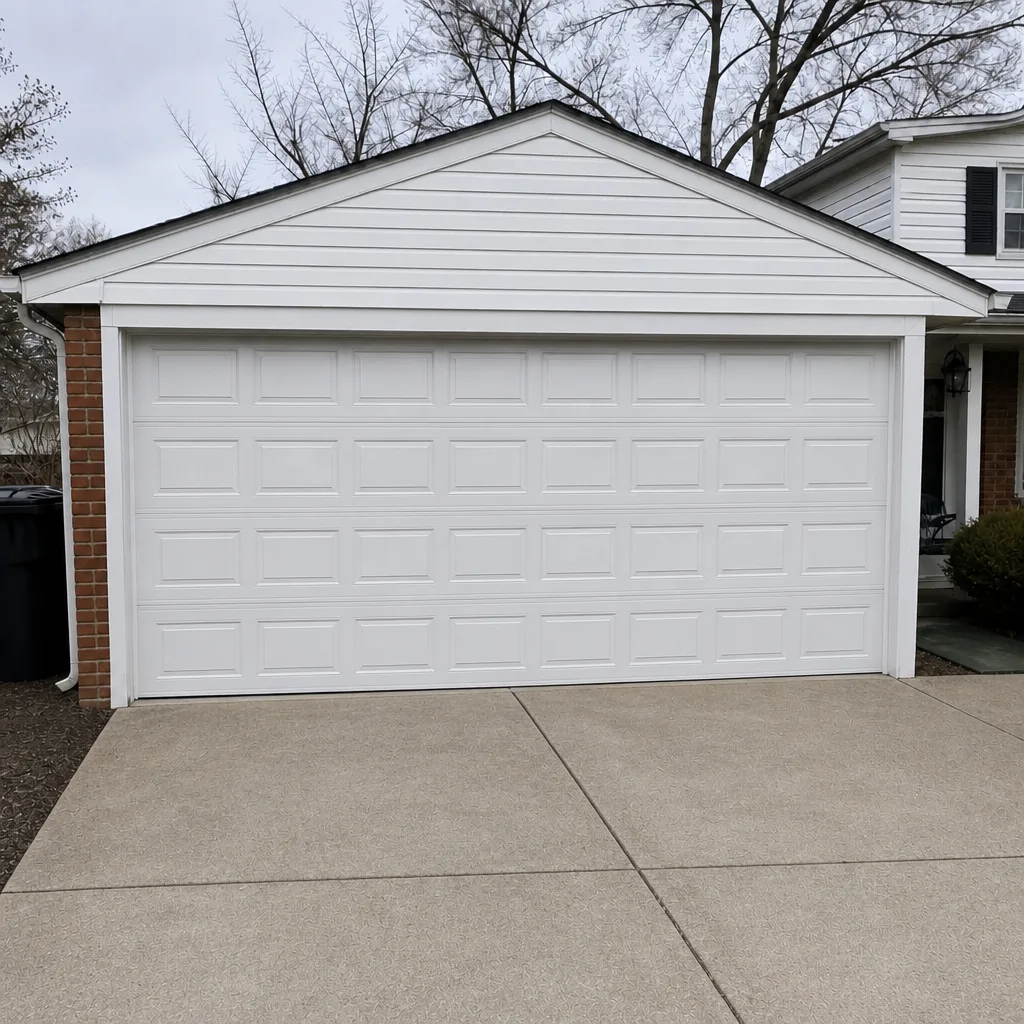 After
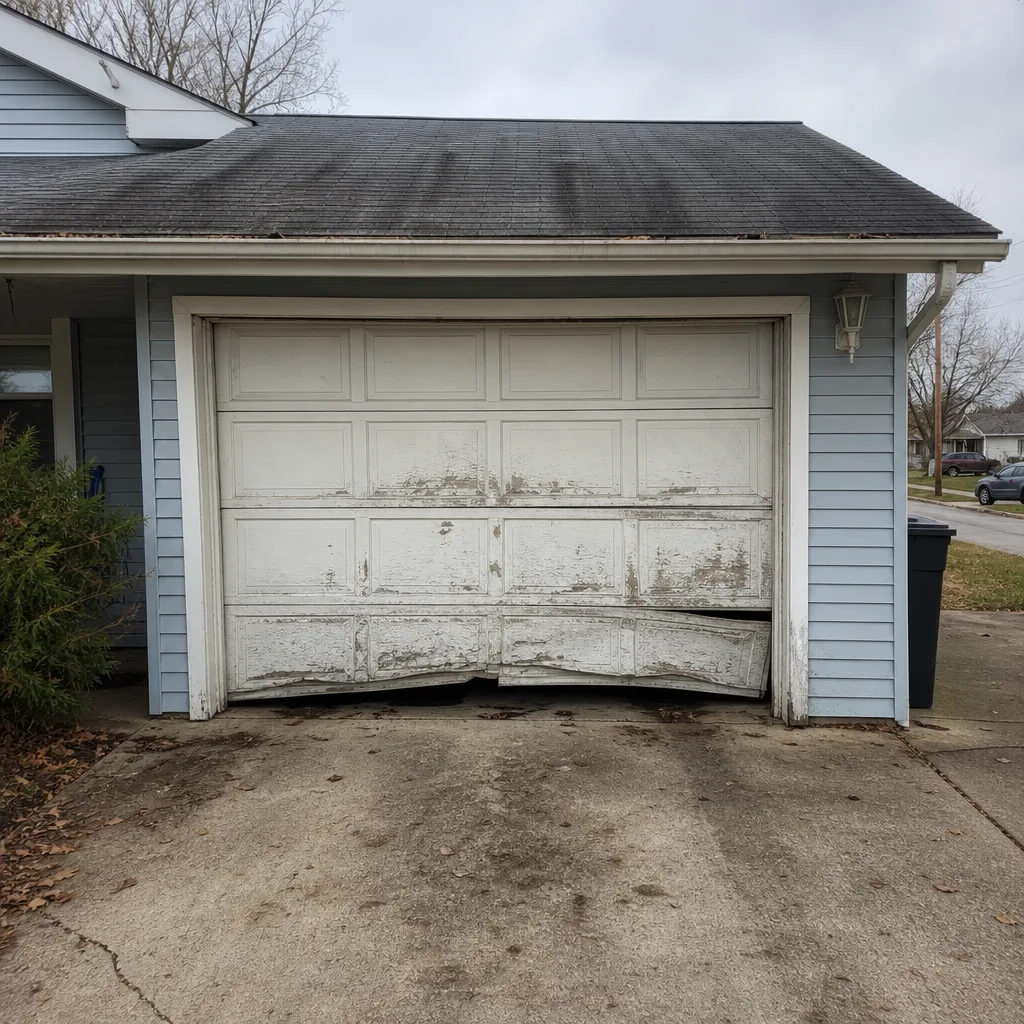 Before
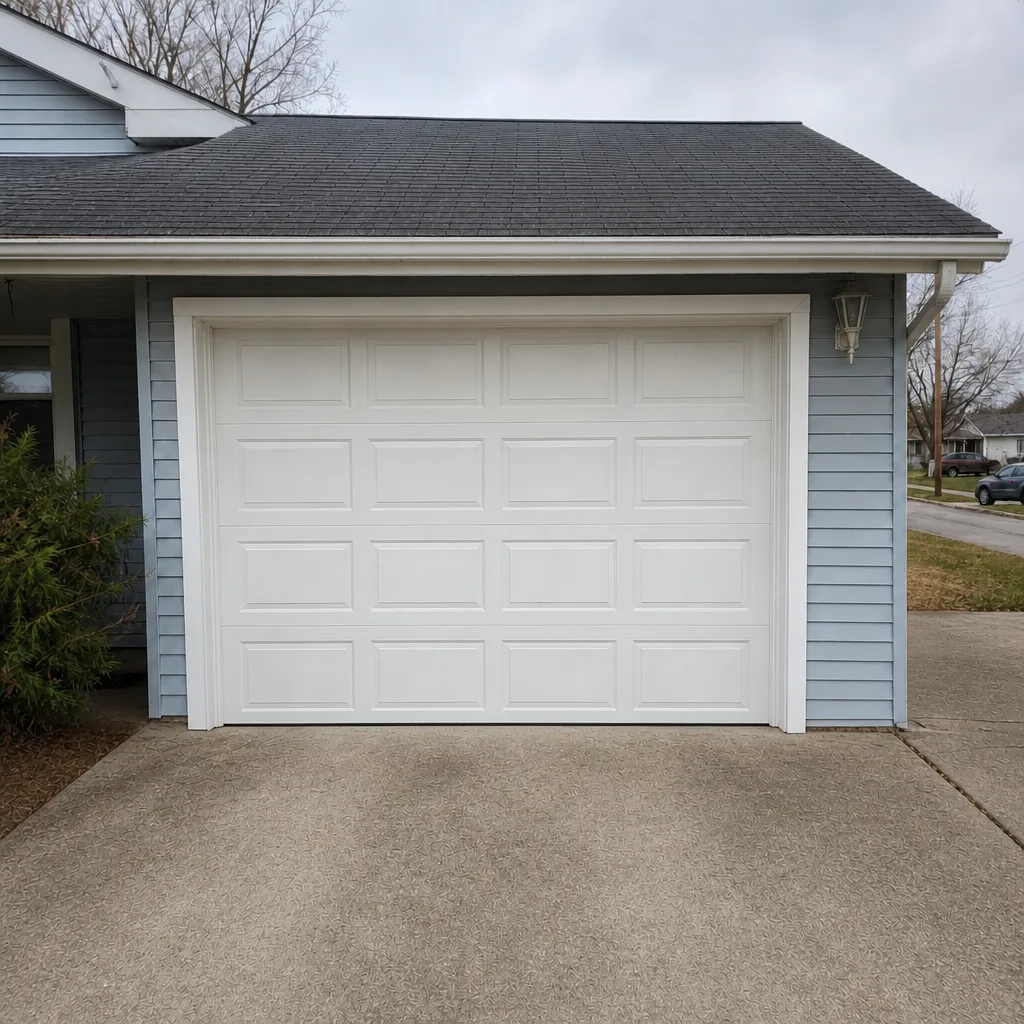 After
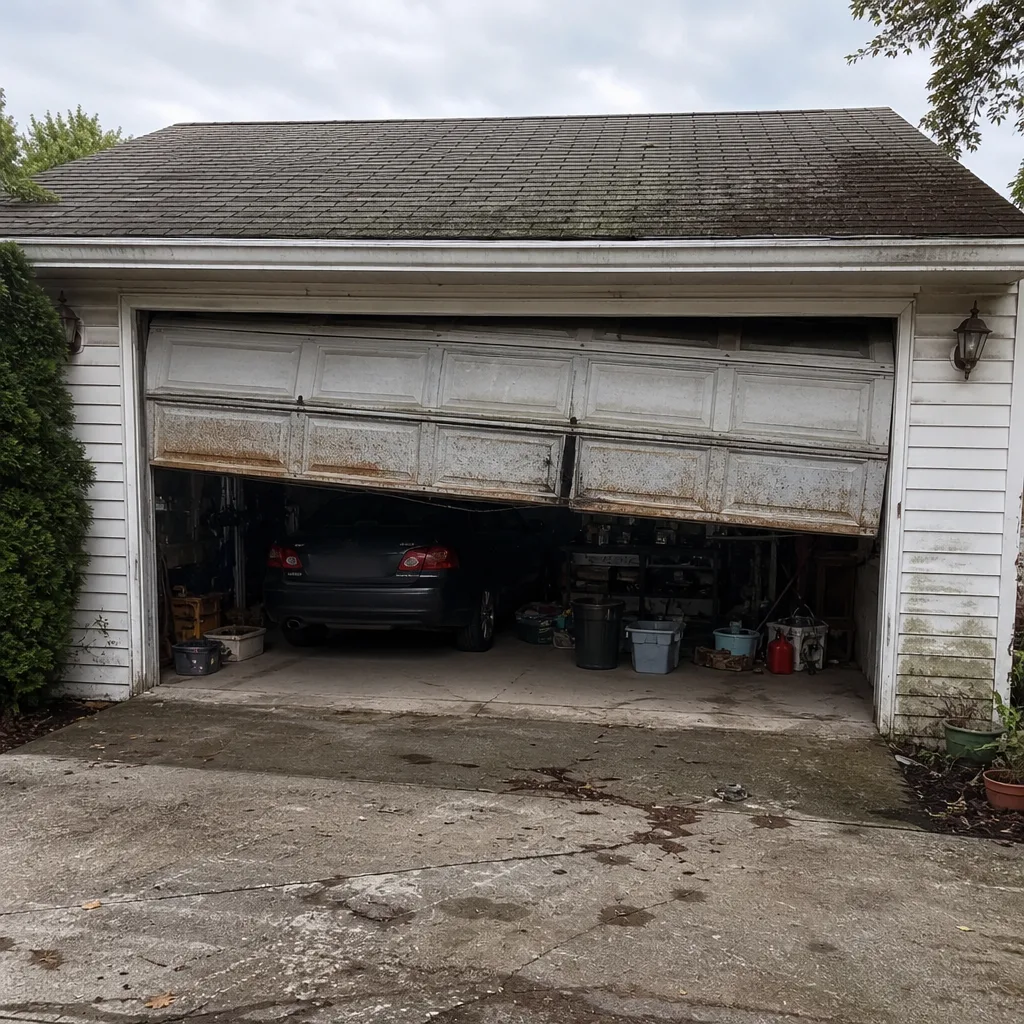 Before
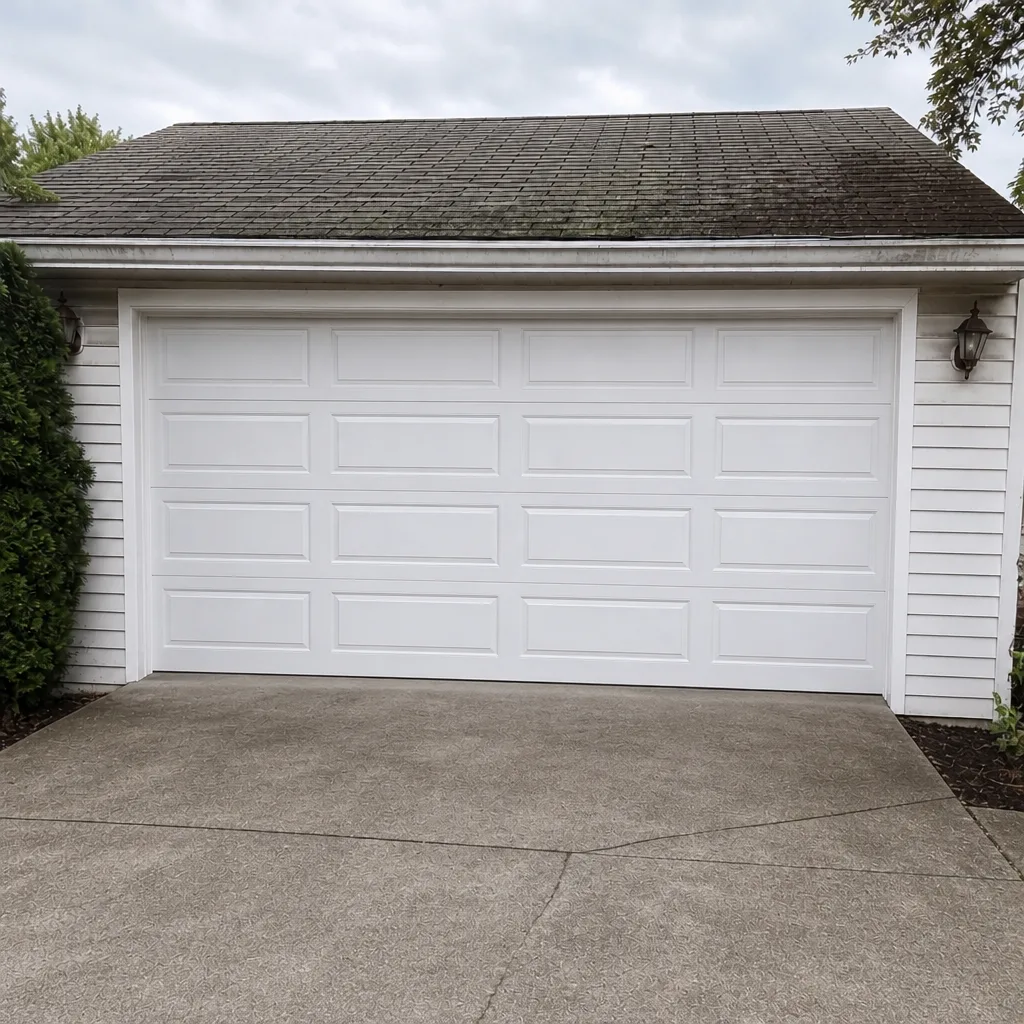 After
When to Call a Professional
Call a technician when the job involves a spring, cable, bottom bracket, or track that needs straightening, because those parts are under load and the risk isn’t worth carrying. Call when the door is out of balance, won’t stay up on its own, or reverses for no clear reason, because those failures point to parts you shouldn’t touch. Call when the opener housing needs to come apart, or when a panel replacement has gone wrong and the door won’t close properly. And call when you’ve checked the simple fixes (sensor alignment, remote programming, lubrication) and the door still won’t run right.
Garage Door Repair Hampden offers free estimates in Hampden. Call (855) 552-9470 and we’ll give you a straight answer on whether your door needs a repair or just a tune-up. Our technicians have up to 15 years of experience, we’re familiar with LiftMaster, Chamberlain, Genie, Clopay, Amarr, Wayne Dalton, Craftsman, and Raynor, and we quote the price before any work starts.
Frequently Asked Questions
No. A torsion or extension spring holds enough stored energy to cause serious injury when it releases, and even experienced mechanics handle spring work with specialized bars and door support tools. If your garage door spring breaks in Hampden, the right move is a call, not a toolbox.
Often yes. A door that won’t close is usually a misaligned safety sensor or a blocked sensor beam, and both are safe DIY checks. Look at the sensor lights near the floor. If they’re solid, check the remote and the wall button. If neither fixes it, call for an inspection.
Lubrication, sensor alignment, remote programming, and bottom seal replacement save real money with minimal risk. Roller and hinge replacement can save money if the door is balanced and you’re comfortable working on it. Spring, cable, track, and opener gear work rarely does.
Spring repair pricing depends on the spring type, door size, and whether it’s a single spring or a matched pair that should be replaced together. We give a written estimate before any work starts so the price you agree to is the price you pay. Call (855) 552-9470 for a free estimate.
Usually yes. Spring, cable, and panel damage caused by a failed repair often spreads to neighboring parts, and the diagnostic time to figure out what changed adds to the bill. In our experience, undoing amateur work typically costs more than the original repair would have.
That depends on your local building department. Most municipalities require a permit for a full door replacement but not for a repair or a spring swap. Ask your city’s building department before ordering a new door. For the installation side of this, see garage door installation.
The Bottom Line
The DIY vs. professional question isn’t about being handy. It’s about the energy stored in the parts you’re touching. Lubrication, sensor alignment, remote programming, and visual inspection are genuinely safe and genuinely save money. Springs, cables, bottom brackets, and track realignment are professional-only, no matter how comfortable you are with tools. The middle tier (rollers, panels, opener internals) is where the savings usually don’t match the risk. If you’re somewhere in the middle and unsure which side of the line you’re on, that’s a good reason to call. We’re Garage Door Repair Hampden, and we work on what you already have.
Contact
Whether your door needs a tune-up, a repair, or a full replacement estimate, we’re ready to help. Call (855) 552-9470 for a free estimate in Hampden. We’ll tell you what’s actually wrong, quote the price before anything starts, and get your door working again. For general service and other repair questions, start at Garage Door Repair Hampden.
Written by the team at Garage Door Repair Hampden.