Last updated November 21, 2026
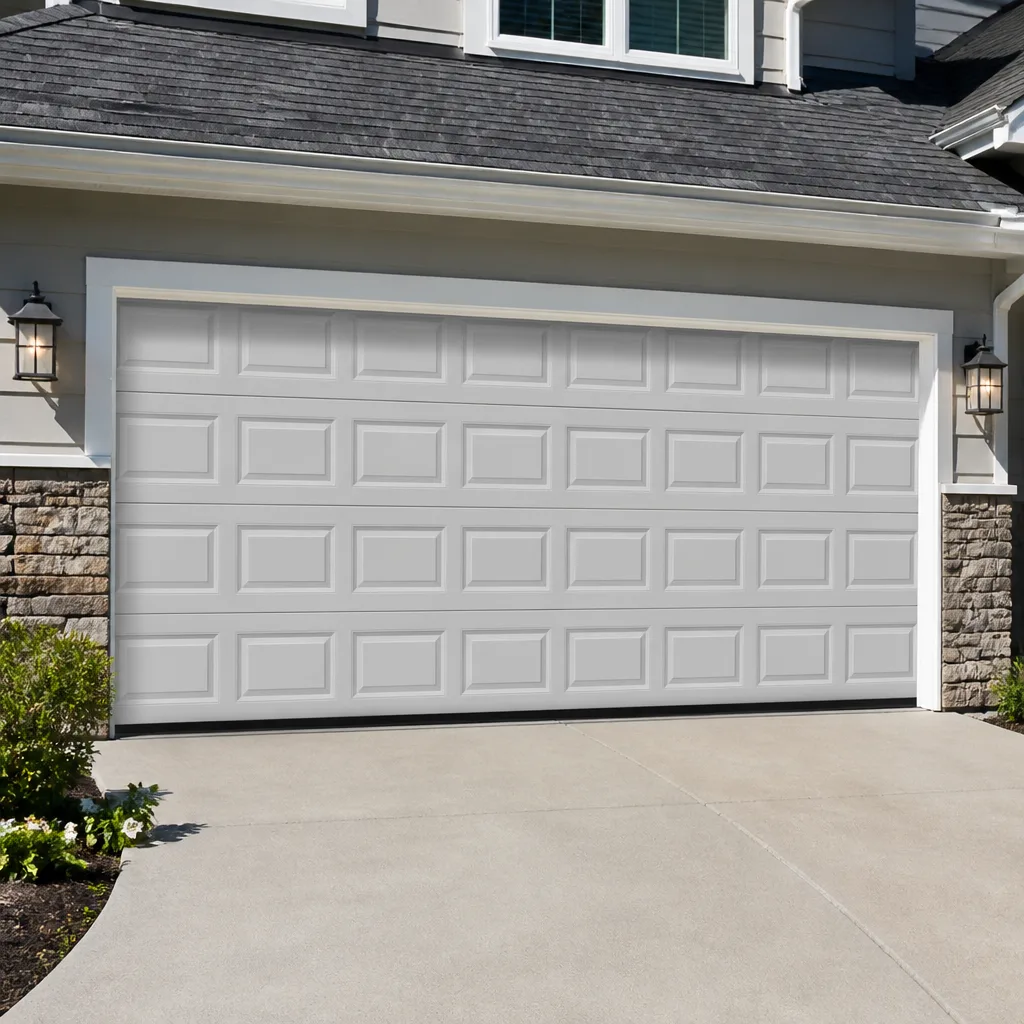 Raised-panel steel
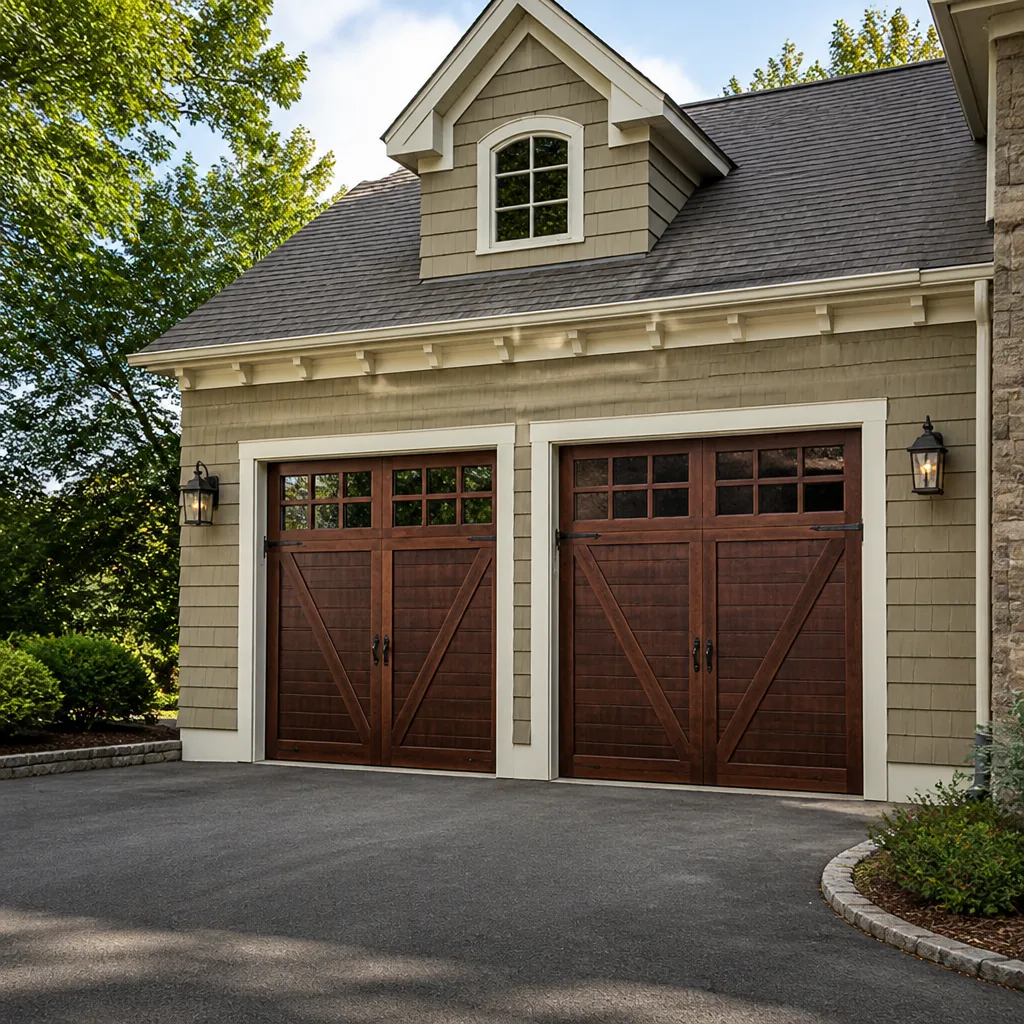 Carriage house
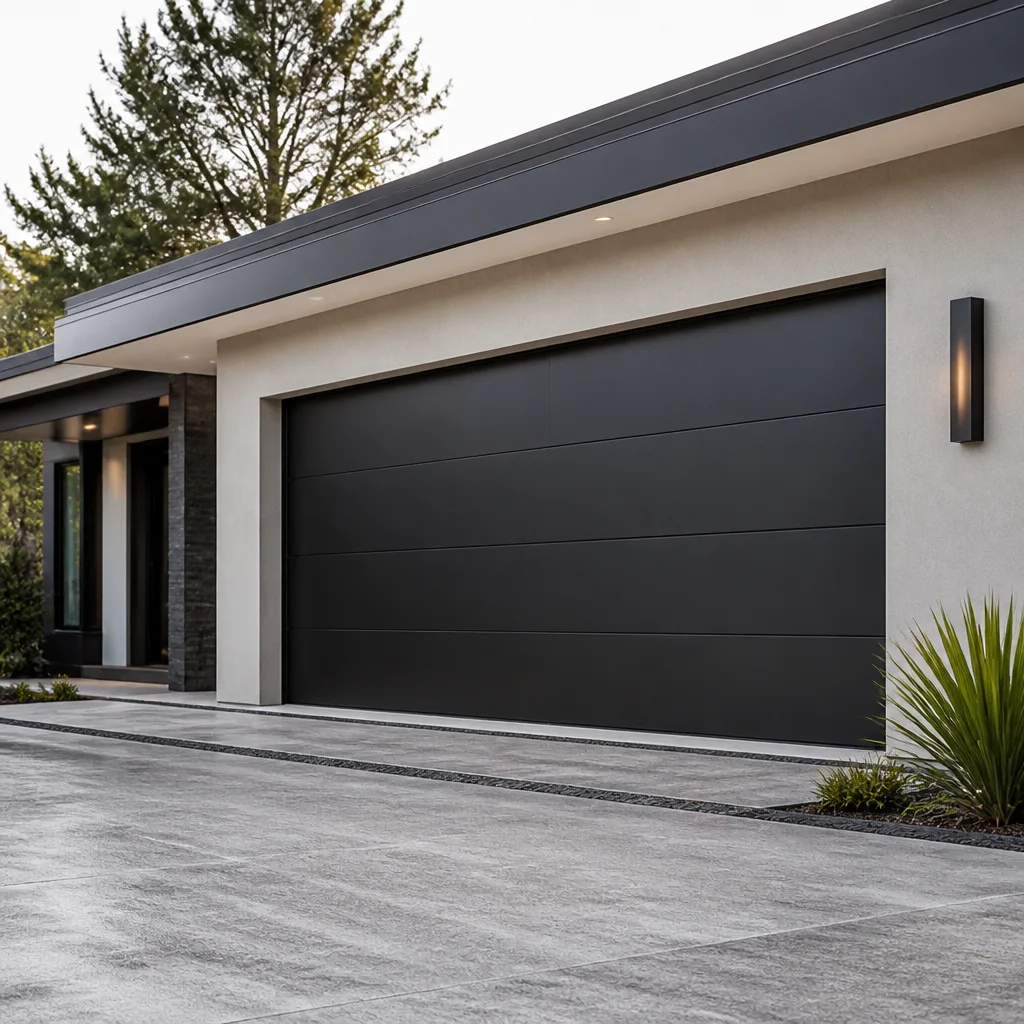 Modern flush
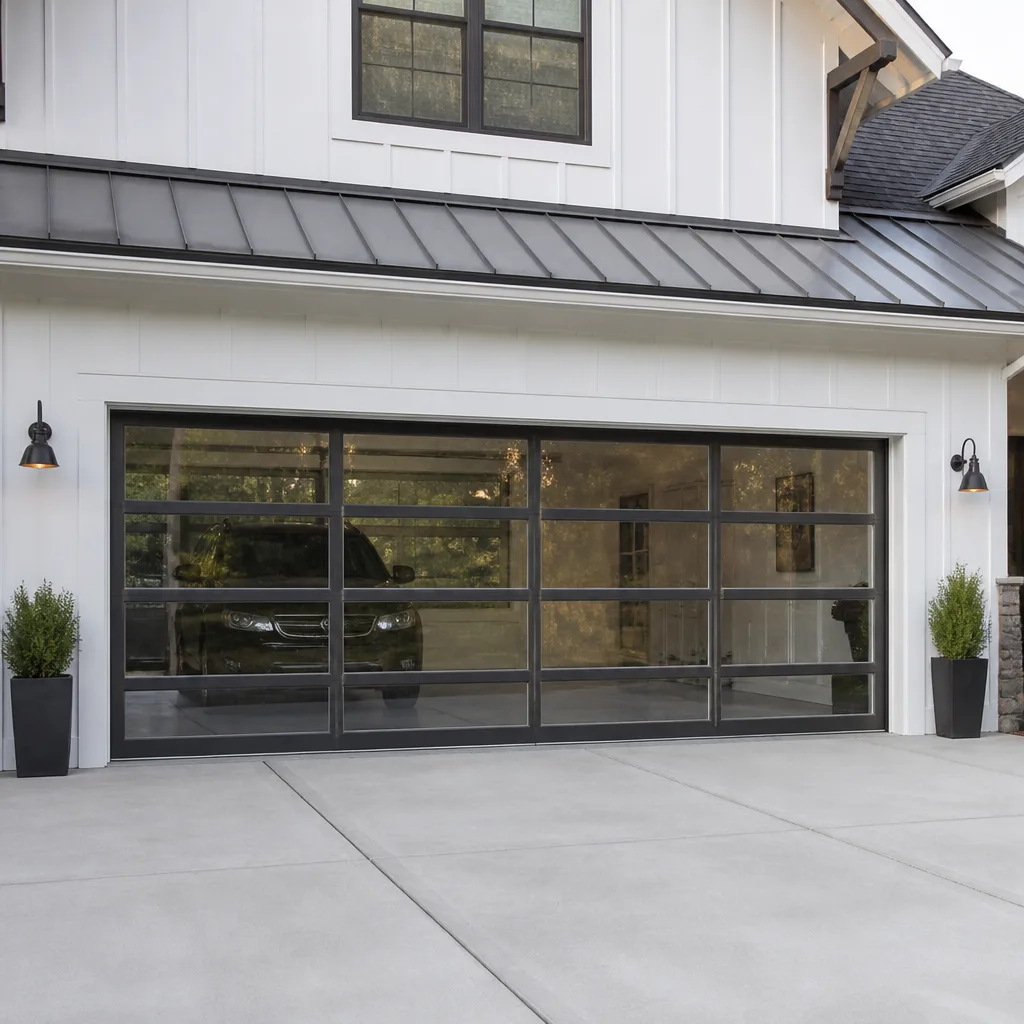 Full-view glass
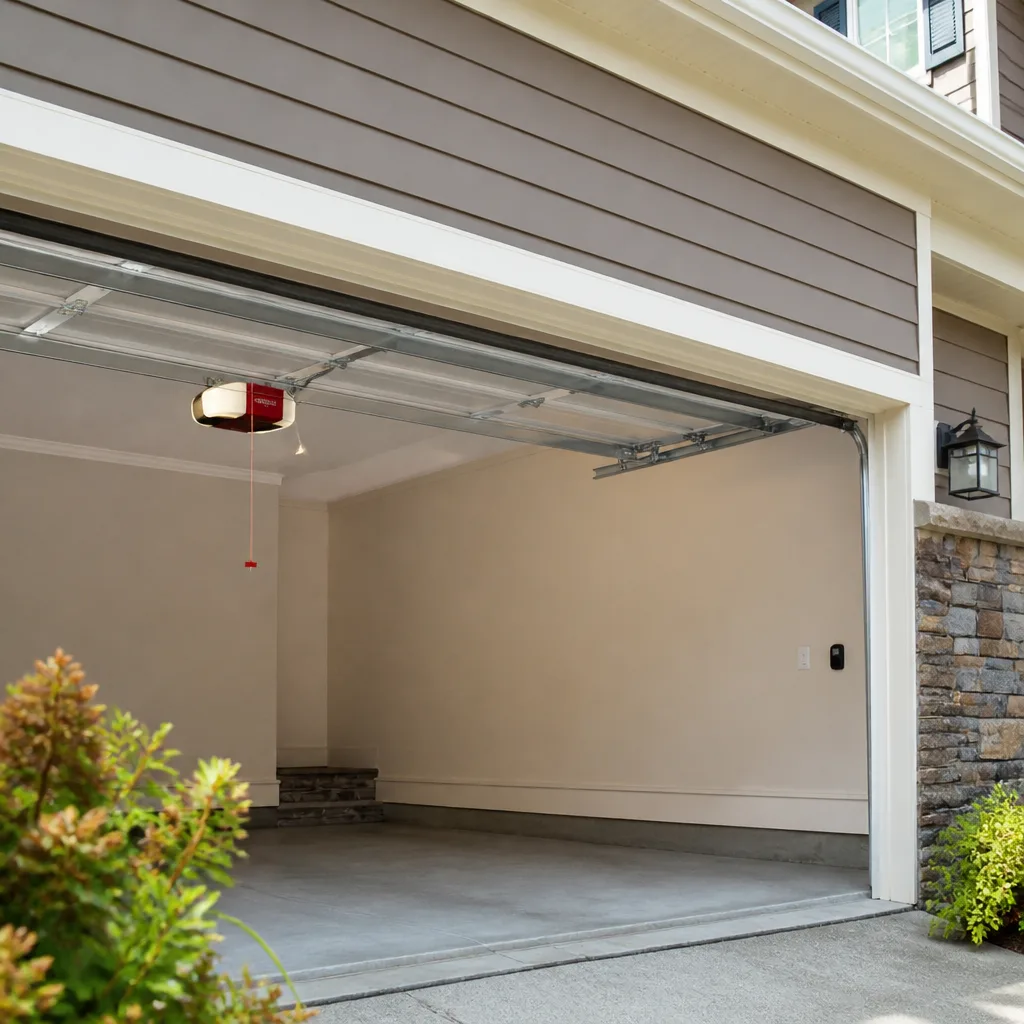 LiftMaster openers
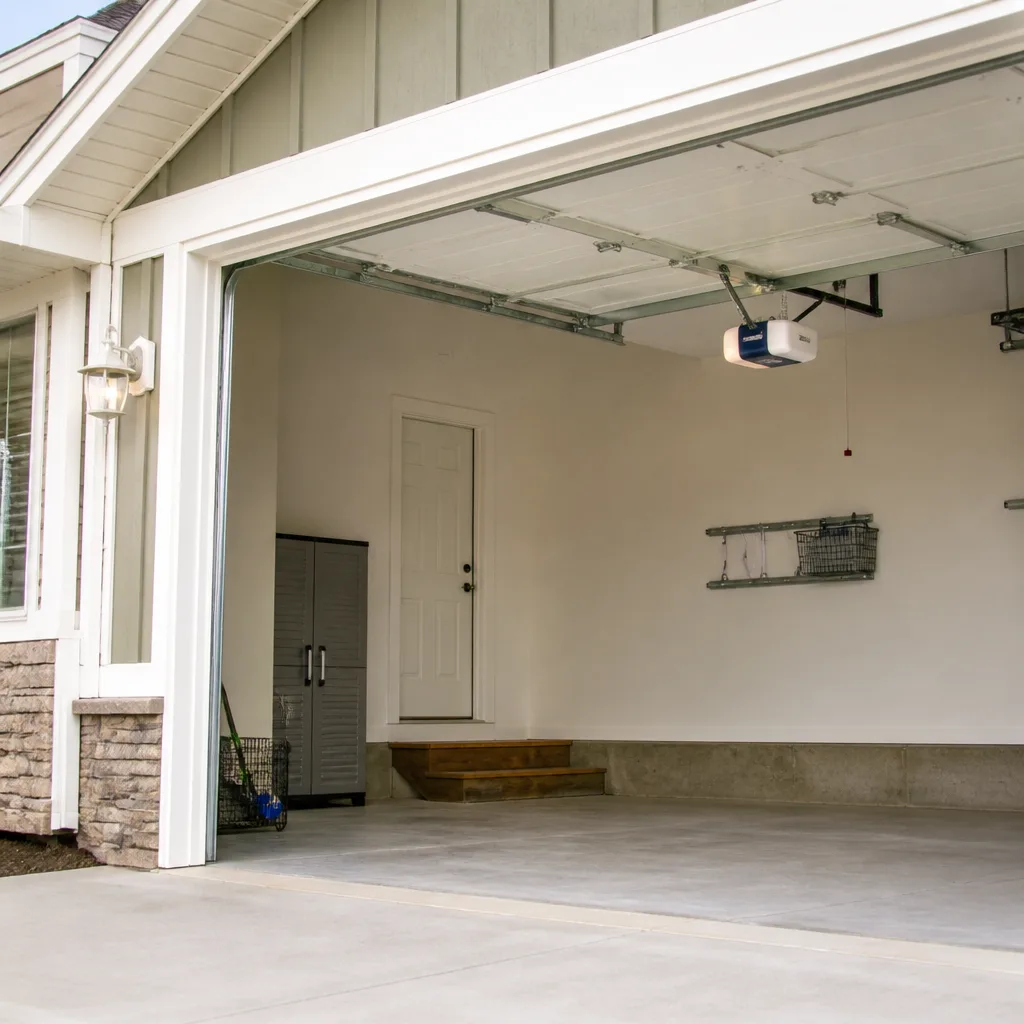 Chamberlain openers
Full 25-point door and opener safety check with every visit - springs, cables, rollers, tracks, and your LiftMaster or Chamberlain opener included
You get a price before we start. It does not change when the pro arrives.
Get your free estimateGarage Door Warning Signs: A Hampden Homeowner’s Reference Guide
Most garage door guides wait until the door has already quit. The spring is snapped, the door is stuck half-open, and the call happens in a panic. But the failures that strand you almost never start with a bang. They begin weeks or months earlier, with a door that opens a little slower than it used to, a sound you can’t quite place, or a gap at the bottom you’ve stopped noticing. The problem is that these early signals look harmless, so Hampden homeowners learn to live with them until the system gives out. This guide is different: it treats those quiet signals as what they actually are – specific mechanical messages from specific parts – and shows you how to read each one before it turns into a repair you can’t schedule on your terms.
Quick Answer
The earliest reliable garage door warning signs are a change in opening speed (especially speed that shifts at a particular point in the door’s travel), new sounds like grinding or popping, a door that no longer sits flush, and any opener that strains or hesitates. Which component is failing depends on where in the door’s arc the symptom appears. Sounds and slowness alone are usually safe to watch for a short time; a visibly broken spring, a door off its tracks, or a door that won’t stay closed needs same-day attention.
Styles & brands we work with
- Raised-panel steel
- Carriage house
- Modern flush
- Full-view glass
- LiftMaster openers
- Chamberlain openers
Table of Contents
- How to Diagnose the Problem by Where It Happens in the Door’s Travel
- Opener Strain vs. Structural Signals: Why They Look Alike
- Sound-Based Diagnosis: What Each Noise Tells You
- Visual Signals on the Door Itself
- What’s Safe to Monitor and What Needs Same-Day Service
- Seasonal Signals in Hampden’s Climate and Housing
- Brand Notes: Why the System You Own Changes the Read
- Common Mistakes to Avoid
How to Diagnose the Problem by Where It Happens in the Door’s Travel
A garage door that opens slower than it used to isn’t “getting old.” That slowdown is a mechanical signal, and the part that’s failing depends entirely on where in the lift the slowness shows up. This is the single most useful thing a Hampden homeowner can learn, because it turns a vague feeling of “something’s off” into a specific clue a technician can work with.
Picture the door’s travel as three zones: the first few inches of the lift, the long middle stretch, and the final approach to the open position. Each zone loads different parts of the system.
- Slowness or hesitation at the very start of the lift: The door is being asked to move from dead weight against gravity. A strain here usually points to the spring system carrying less tension than it should, or a torsion spring that’s lost some of its wind. The opener is doing work the spring should be doing.
- Slowness or dragging through the middle: Gravity is neutral here, so the door should travel freely. If it doesn’t, the resistance is often in the rollers, hinges, or track alignment – mechanical friction rather than a power problem.
- Slowness near the top, or a door that “bounces” as it finishes opening: The top of the travel is where the spring tension and the opener’s limit settings meet. A door that slows only near the top often has an opener limit setting that’s drifting, or a torsion spring wound unevenly.
- Slowness that’s worse in one direction than the other: If it opens fine but closes sluggishly, or vice versa, you’re looking at a balance issue rather than a pure opener issue.
The trick is to watch the door for one full open and close cycle, slowly, without treating it as a race. Note exactly where the change happens and whether it repeats in the same spot. That single observation, “it hangs at the top,” tells us far more than “it feels slow.” If the slowness is clearly tied to the opener rather than the door, garage door opener repair is usually the place to start.
Opener Strain vs. Structural Signals: Why They Look Alike
Here’s where a lot of Hampden doors get misdiagnosed. An opener that’s straining and a door that’s binding both make the door labor, stutter, or sound unhappy. They look almost identical from the driver’s seat of your car. But the fix for each is completely different, and treating one as the other is how a small repair becomes an expensive one.
An opener strain problem lives in the motor or its settings. The door itself is fine; the unit pulling it has lost power, its gear is wearing, its logic board is confused, or its travel limits have drifted. On the other hand, a structural problem lives in the door – a spring, a hinge, a roller, or a track. The opener is working fine; it’s just being asked to drag a door that isn’t moving freely.
A reliable way to separate the two is to think about how the symptoms line up with the door’s balance. Run the door by hand with the opener disconnected when you can do so safely:
- Pull the emergency release cord so the door is disconnected from the opener.
- Lift the door slowly to about halfway and let go.
- Watch what the door does on its own. A balanced door holds roughly in place. One that sinks means the spring system is weak or the door is out of balance; one that rises on its own means it’s over-tensioned.
If the door holds in place but still struggles when the opener is connected, the strain is in the opener. If the door won’t hold, the structural side is the culprit, and a spring or balance adjustment sits behind the problem. We see this exact mix-up often in Hampden, where a strained opener gets replaced and the door still drags because the real issue was never the motor. If you’re weighing whether to repair or replace, our guide to garage door repair walks through that call. Never reach into or attempt to adjust a torsion spring or cable yourself; these are under extreme tension and cause serious injury when they let go. Leave spring work to a trained professional.
Sound-Based Diagnosis: What Each Noise Tells You
Your ears are a surprisingly good diagnostic tool if you know what to listen for. A garage door that sounds different than it did six months ago is telling you which component is complaining. Here’s a plain-language key to the four sounds Hampden homeowners most often mention.
- Grinding: Usually a metal-on-metal contact. The most common source is worn rollers in the track, or a torsion spring that’s rubbing at its center bearing. Grinding that gets louder with the speed of travel points toward the rollers or a cable rubbing the edge of a drum.
- Squeaking: Friction at a pivot point – hinges, rollers, or the top brackets – often because lubrication has dried out. Squeaking alone is the most benign sound on this list, but it’s the one most likely to be a sign of wear you can still catch early.
- Popping or a sharp snap: This is the one to pay attention to. A pop often means a torsion spring is slipping a wind, a cable has jumped a drum, or a hinge has cracked. A single loud snap followed by the door losing its ability to lift usually means a spring has broken outright.
- Rattling: Loose hardware – bolts, hinges, brackets, or a motor mount that’s working loose. Rattling is usually tracked back to fasteners that need to be tightened before they shear or tear out of the panel.
The useful trick is to note when the sound happens. A grind that only appears at the very start of the lift is a different problem from a grind at the top, and a pop near full-open is a different call from a pop at the bottom. Our technicians have up to 15 years of experience, and most of the useful diagnostic work on a garage door call starts with the customer’s one-line description of the sound and where it appears.
Visual Signals on the Door Itself
Sight comes next. The door’s panels and the spaces around it tell you a lot before anyone touches a tool. Walk around and look at these four things, ideally once a season, especially ahead of a Hampden winter.
Gap patterns. Stand outside and look at the seams between your door panels. Even seams are normal. A seam that opens into a wedge, wider on one side than the other, means the panels are no longer sitting square – often a sign of a bent hinge, a worn roller, or a track that’s out of alignment. Gaps along the bottom, where the door meets the floor, mean the door is no longer sitting level and the seal is failing.
Panel bowing. A panel that bulges or bows inward is showing you it’s lost its shape. That can happen from a hard bump or from a door that’s been working against a binding track for a long time. Bowed panels predict an imminent track or hinge failure because the door is no longer running in the plane the tracks expect.
Track alignment. Step back and look down the length of each vertical track. A straight track looks straight. A track that bows, kinks, or has a visible gap between sections is out of line, and a door running through an out-of-line track is a door that’s one cycle away from a stuck panel.
Hinge wear. Look at the hinges where the panels connect. Rust, cracked hinge plates, or hinges that look off-center are early signs the hardware is fatigued. Catching a bad hinge is cheap; catching it after it fails can mean a panel or two of damage. Full installation, if you get to that point, is covered in our garage door installation guide.
What’s Safe to Monitor and What Needs Same-Day Service
Not every warning sign is an emergency, and treating them all that way is its own kind of expensive. Here’s the practical triage we use, sorted into what can wait a short while and what shouldn’t.
Safe to monitor for a few weeks:
- Occasional squeaking at the hinges or rollers.
- A faint rattle that you can trace to a loose bolt or bracket.
- A slow, mild change in door speed with no other symptoms.
- Weather-strip wear at the bottom of the door.
For these, note the change, keep an eye on it cycle by cycle, and get an estimate booked before something bigger shows up.
Worth a same-day call:
- A visibly broken spring, or a single loud snap followed by losing lift.
- The door hanging crooked, off its tracks, or one side higher than the other.
- A door that won’t close all the way and leaves the house open.
- A popping sound that repeats, or a door that grinds noticeably louder than it used to.
- An opener that hums but doesn’t move the door, or that reverses at random.
- Anything with a frayed or visibly damaged cable.
A door that’s stuck open on a cold night, a stormy evening, or a Sunday is exactly the kind of call we take seriously. We’re closed on Saturdays, but if a door fails on a Saturday, call and we’ll book you for Sunday. Our emergency garage door service exists for precisely this gap, because a stuck door is a security and weather problem in one. We work on what you already have rather than pushing a replacement, and our technicians arrive familiar with the brand in your garage.
Seasonal Signals in Hampden’s Climate and Housing
Garage doors in Hampden live through real seasonal swings. The same changes in temperature that make your wood floors creak do the same thing to door hardware. Knowing the seasonal pattern helps you interpret a symptom that appears at one time of year and fades at another.
In colder months, the metal in the door and tracks contracts slightly. That’s enough to tighten a door that was running fine in October into one that binds or slows at the top. Springs also respond to temperature; torsion springs that are just on the edge of spec in a mild week can behave differently in a cold snap. The other common cold-month signal is a door seal that hardens and stops sealing cleanly, letting cold air and moisture past the bottom.
In warmer, wetter stretches, the signal tends to flip. Lubrication dries out, wood and wood-adjacent parts swell a little, and hinge friction goes up. That’s when much of Hampden reports squeaks and mild grinding. None of this means the door is failing on a schedule. It means the same underlying wear announces itself at different times depending on the season, and a door that sounds off in February and fine in April usually has a wear issue that just settled back down, not one that disappeared.
Housing in Hampden runs across a mix of older homes and newer builds. Older doors have had more cycles and more time to accumulate wear, so a lightly-used door in an older Hampden home can still be closer to a failure than a well-used one in a newer house. Look at the door’s history, not its age alone. If the door has been quiet and stable for a long time and suddenly isn’t, that change is worth a professional look even if nothing looks visibly wrong.
Brand Notes: Why the System You Own Changes the Read
Your door and opener brand changes how some of these warning signs show up. That’s not a marketing angle; it’s a practical point. The same symptom can mean different things depending on the system, and knowing the brand helps a technician read it faster. We service LiftMaster, Chamberlain, Genie, Clopay, Amarr, Wayne Dalton, Craftsman, and Raynor, and the technicians arrive familiar with the exact system in your garage before anyone gets out of the truck.
LiftMaster and Chamberlain openers have protective features that can throw a warning sign of their own. If the door reverses at random or hesitates near the bottom, the opener may be reading resistance as an obstacle, not a mechanical fault. That’s an easy one to misread as a door problem when it isn’t.
Craftsman openers are common on entry-level doors and sometimes show travel-limit drift, where the door slows or stops a little short of full-open. If it only shows up near the top, the limit switch is often the read.
Wayne Dalton and Raynor doors show up on both residential and light-commercial properties. On a heavier door, the same grinding sound carries more weight because the parts are under more load. A binding track on a heavier door is not something to watch for a few weeks. A structural fix is the better call.
Across any brand, the underlying rule is the same: a symptom on the opener side usually shows up as erratic logic or reversing, while a symptom on the door side shows up as changes in speed, sound, or alignment. The brand tells you where to look first.
Common Mistakes to Avoid
- Ignoring a change in speed because the door still works. A door that works but has changed speed is telling you something is creeping out of spec. Waiting for it to fail means the repair happens on the door’s schedule, not yours, usually at the worst possible time.
- Assuming every problem is the opener. A strained opener is the visible symptom; the door binding or out of balance is often the cause. Replacing the opener without fixing the door leaves the new unit to wear out the same way.
- Treating “it only does it at the top” as normal. Symptom location in the travel arc is the most useful diagnostic clue there is. Don’t wave it off as just how the door is.
- Spraying lubricant on everything. Over-lubrication collects grit in the tracks, which causes more wear than the noise did. A little on the pivot points, not the tracks.
- Loosening or adjusting a torsion spring or cable. The most common serious injury in garage door repair is not from the door; it’s from a homeowner trying to adjust spring tension. If it involves a spring or cable, call us; don’t attempt it.
- Waiting for a stuck door to fix itself. A door that stops mid-travel once will stop again. A one-time symptom often repeats right when you can’t afford it.
- Skipping a seasonal look because the door seems fine. The two-minute walk-around catches gap patterns and hinge wear that would otherwise go unnoticed for months. A quick seasonal check is the cheapest maintenance there is.
See the difference
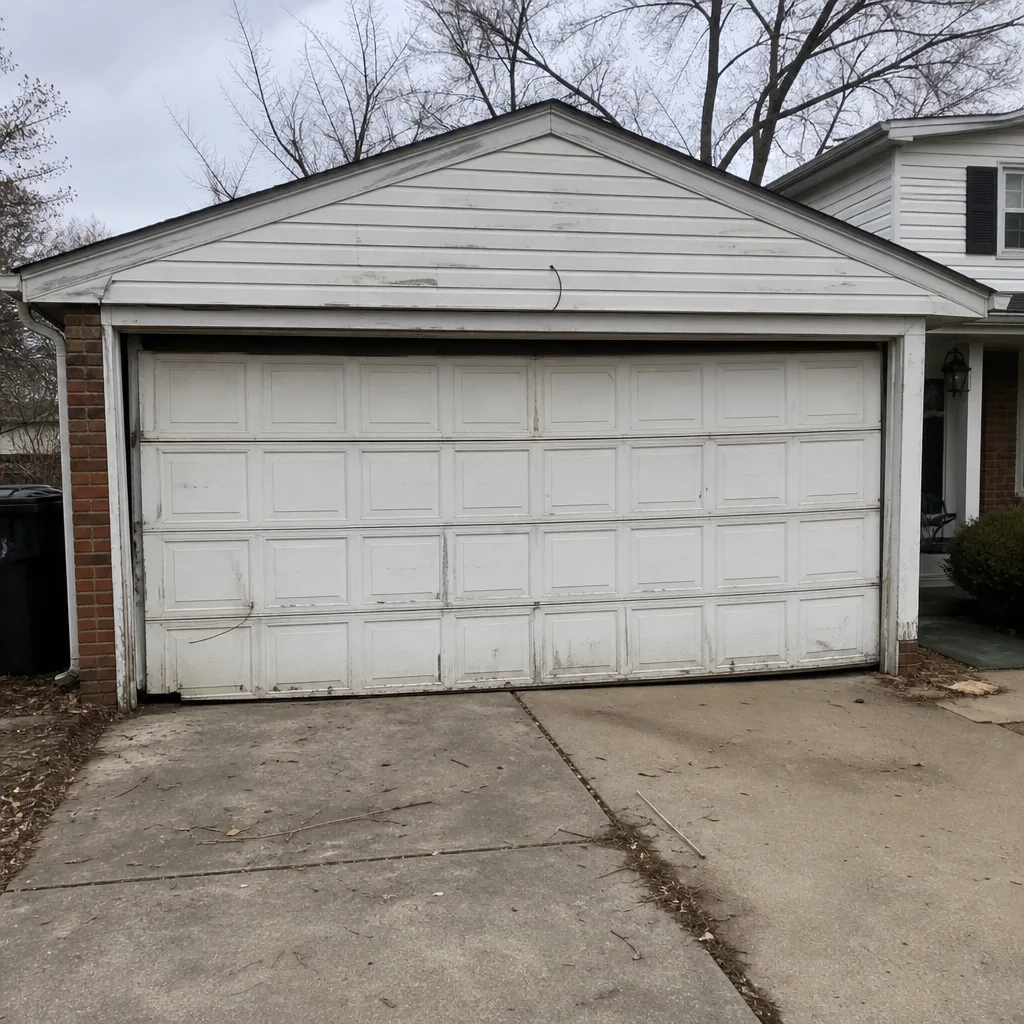 Before
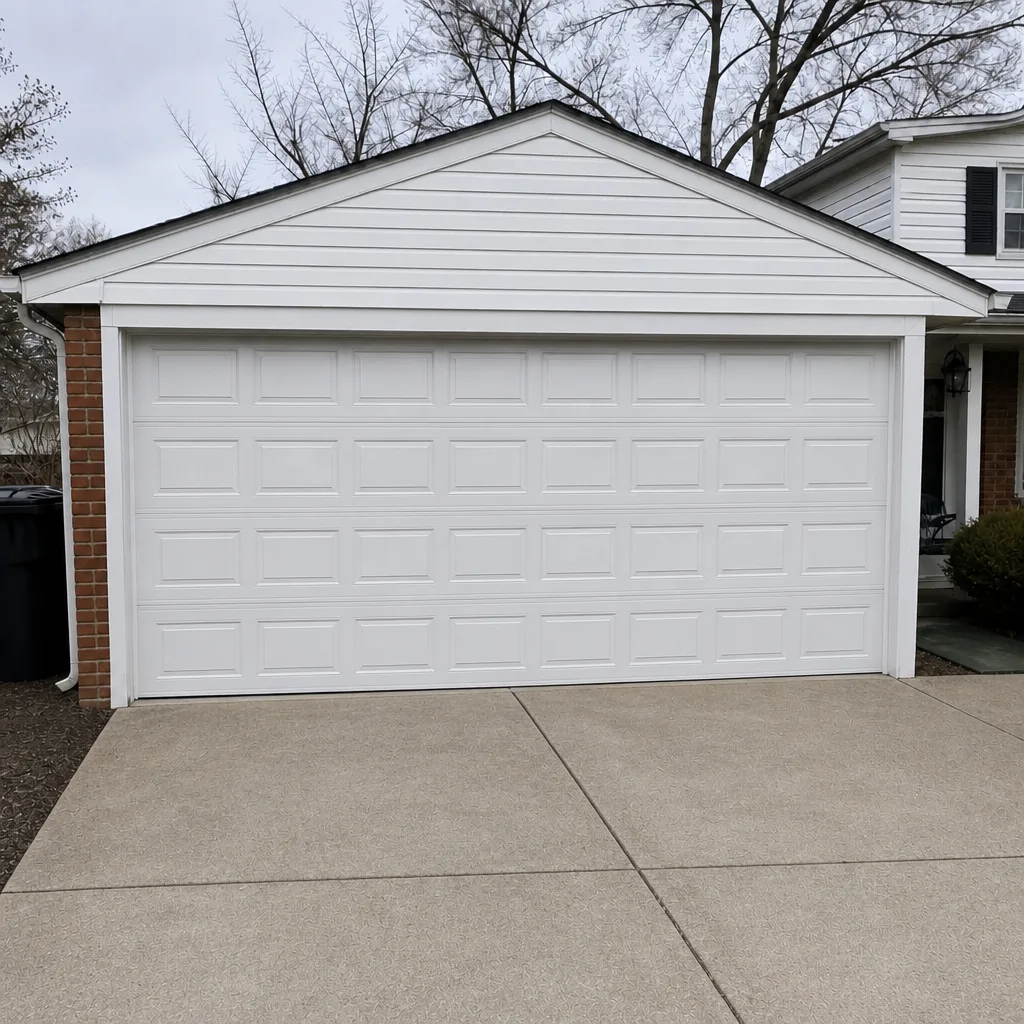 After
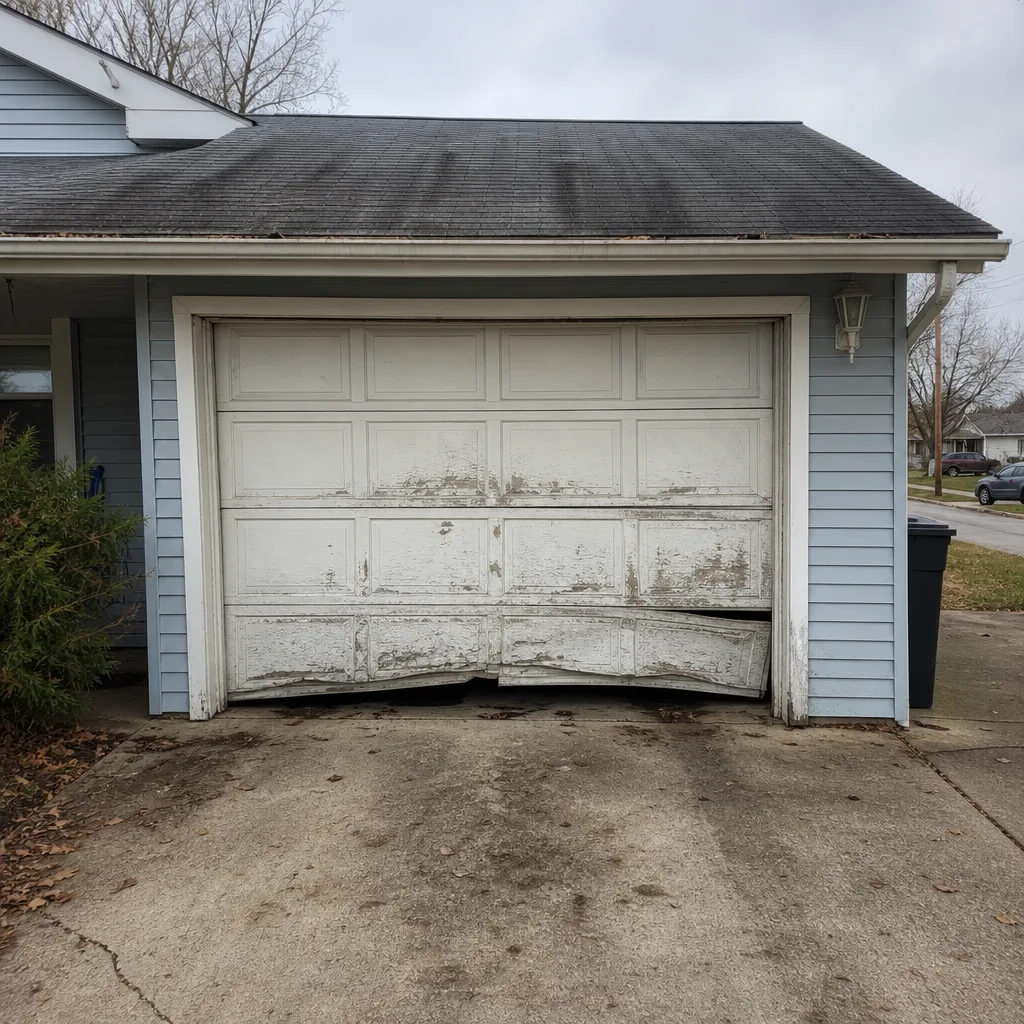 Before
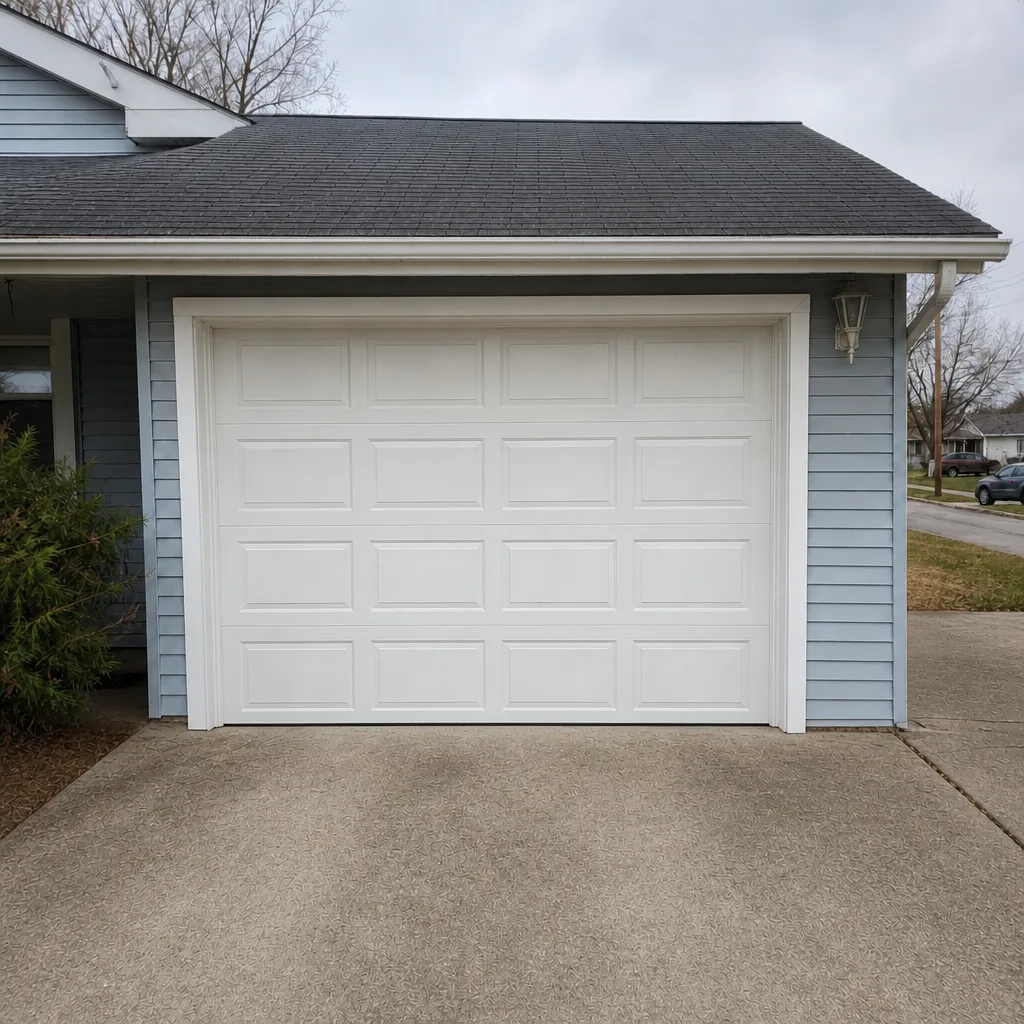 After
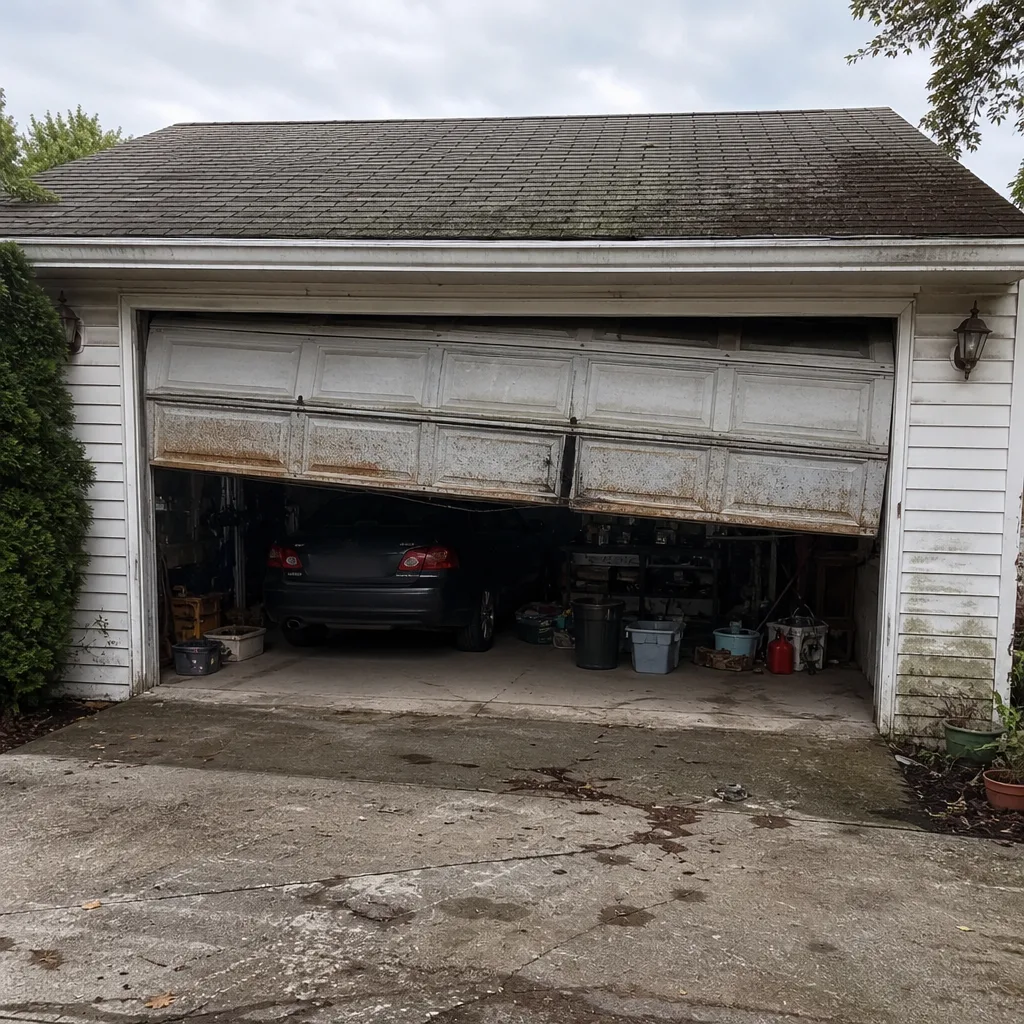 Before
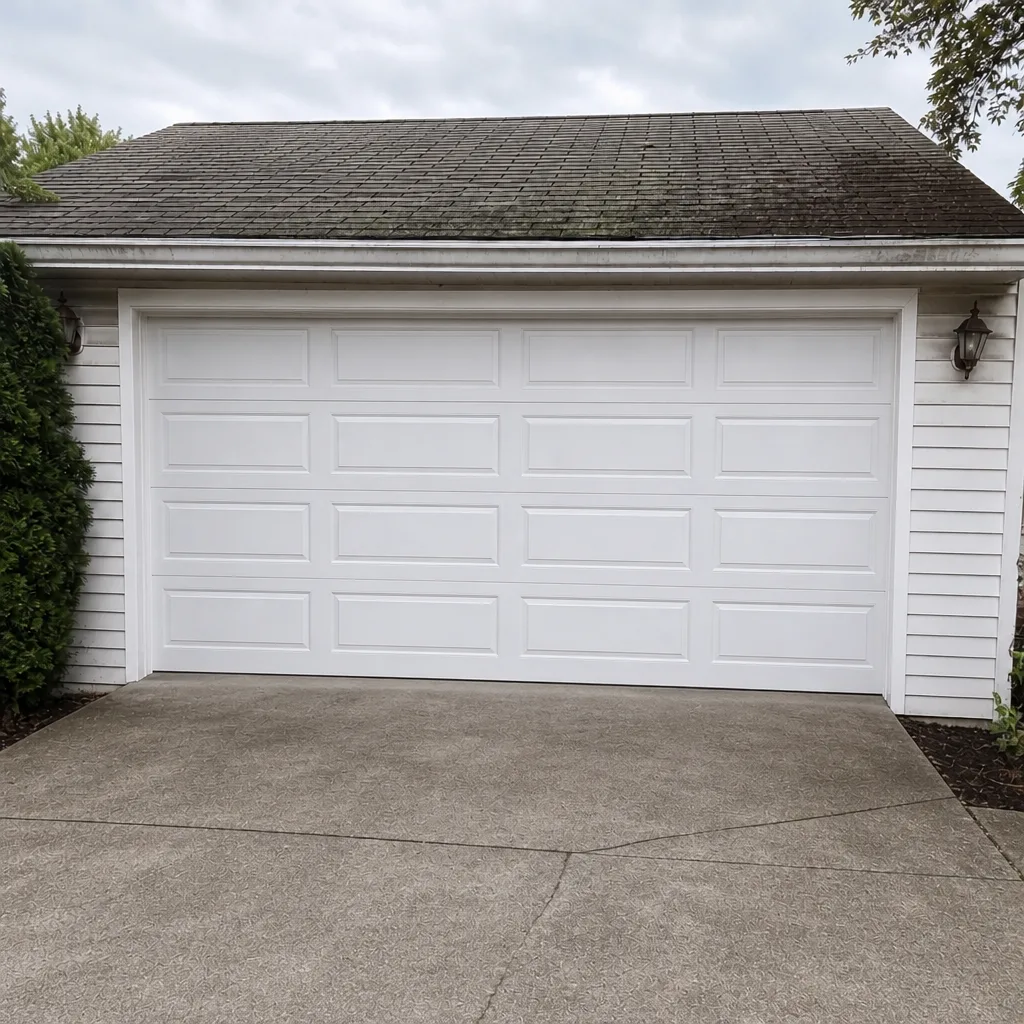 After
When to Call a Professional
Call a professional when any of these appear: a visibly broken spring, a door hanging crooked or off its tracks, a cable that’s visibly frayed, an opener that hums without moving the door, or a door that won’t close all the way. Call also if the same symptom has been repeating for a few weeks and you’ve decided to stop watching it. The most common outcome of a same-day call is a diagnosis and a fix that costs less than the eventual full repair would have. Garage Door Repair Hampden offers free estimates in Hampden – call (855) 552-9470. Spring, opener, panel, or full door; one call covers it, and the door works or we’re not done.
Frequently Asked Questions
Garage door repair in Hampden is priced per job by estimate, because the cost depends on what’s actually failed – a spring, an opener, a track, or hardware. The written estimate we give you before any work starts is the price, and you’ll know the number before anyone touches the door. Call (855) 552-9470 for an exact quote – estimates are free.
The quickest test is to disconnect the opener with the emergency release and lift the door by hand: if it doesn’t hold roughly in place at halfway, the problem is on the door side (spring or balance), and if it holds fine but still strains under the opener, the problem is the opener. If you’re not comfortable lifting the door yourself, don’t – just note where in the travel the symptom appears and call (855) 552-9470.
Squeaks, a mild speed change, and a loose rattle can usually be monitored for a short while. A broken spring, a crooked or off-track door, a frayed cable, a repeated pop, or a door that won’t close all the way needs same-day attention. If you’re unsure which side of the line you’re on, call (855) 552-9470 and we’ll help you decide – estimates are free.
No. A symptom that fades in one season and returns in another is a sign of wear that settled back, not one that disappeared. The underlying part is still out of spec, and waiting for a gap between episodes usually means the repair lands when you least want it. Call (855) 552-9470 and we’ll look at it before it fails outright.
No. We quote and agree the price before any work starts, and the written estimate is the final number. If something different turns up under the hood, we walk you through it before we touch a tool so you’re never surprised at the end. Call (855) 552-9470 for a free estimate in Hampden.
The local professional we connect you with is licensed and insured as Maryland requires, and our technicians have up to 15 years of experience. We service all eight of the major brands – LiftMaster, Chamberlain, Genie, Clopay, Amarr, Wayne Dalton, Craftsman, and Raynor – and we work on what you already have. Call (855) 552-9470 for an exact quote.
The Bottom Line
Garage door failures almost always announce themselves before they happen. A change in opening speed, a new sound, a gap at a seam, or a door that no longer sits level is your door telling you which part is under strain. Read the symptom by where in the travel arc it appears, separate opener strain from structural problems, and triage the signs: watch the squeaks and rattles, but never sit on a broken spring, an off-track door, or a cable. The earlier the read, the smaller the repair. When in doubt, a free estimate from Garage Door Repair Hampden costs nothing and often saves the big bill later.
If something in this guide matches what your door is doing, call (855) 552-9470 for a free estimate. We work on what you already have, we’re familiar with your brand before we arrive, and we book same-day and emergency calls because a stuck door doesn’t wait for a convenient time. Spring, opener, panel, or full door: one call covers it.
Written by the team at Garage Door Repair Hampden.