Last updated November 21, 2026
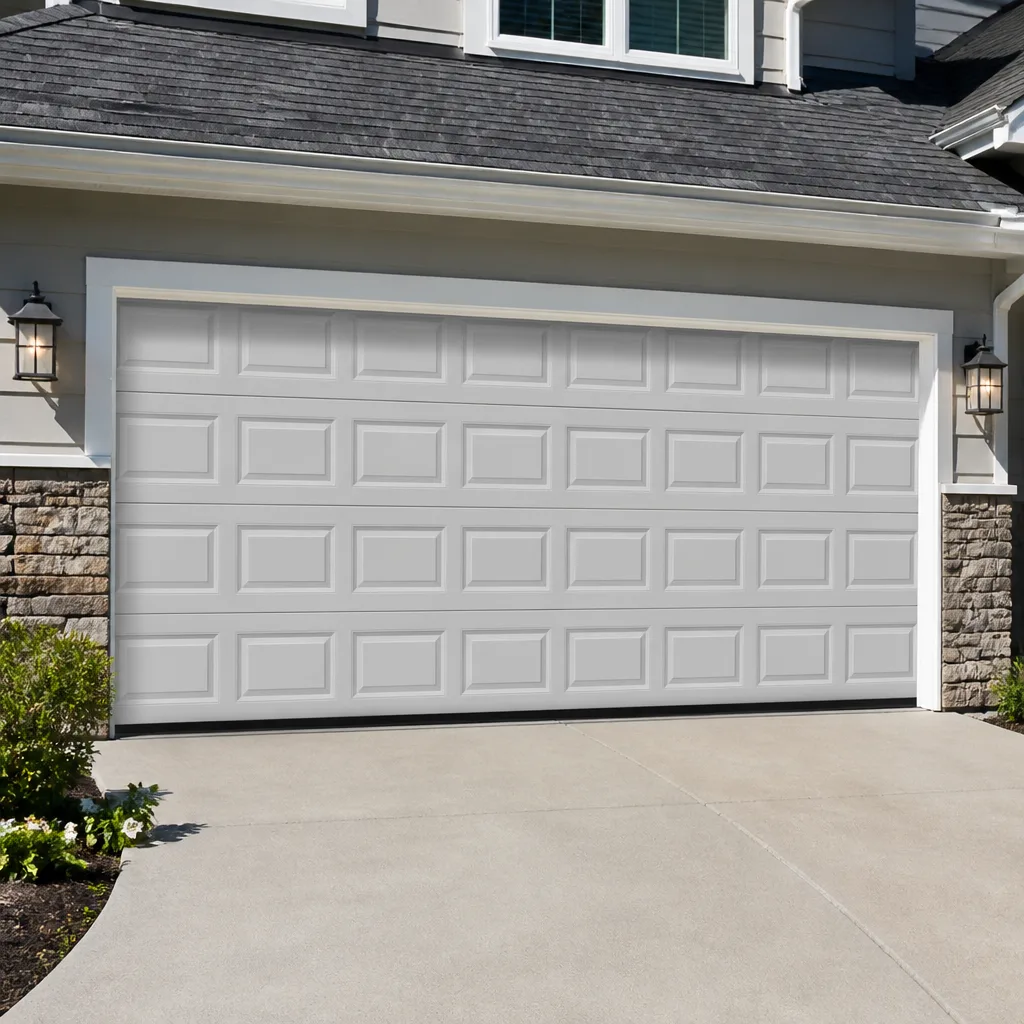 Raised-panel steel
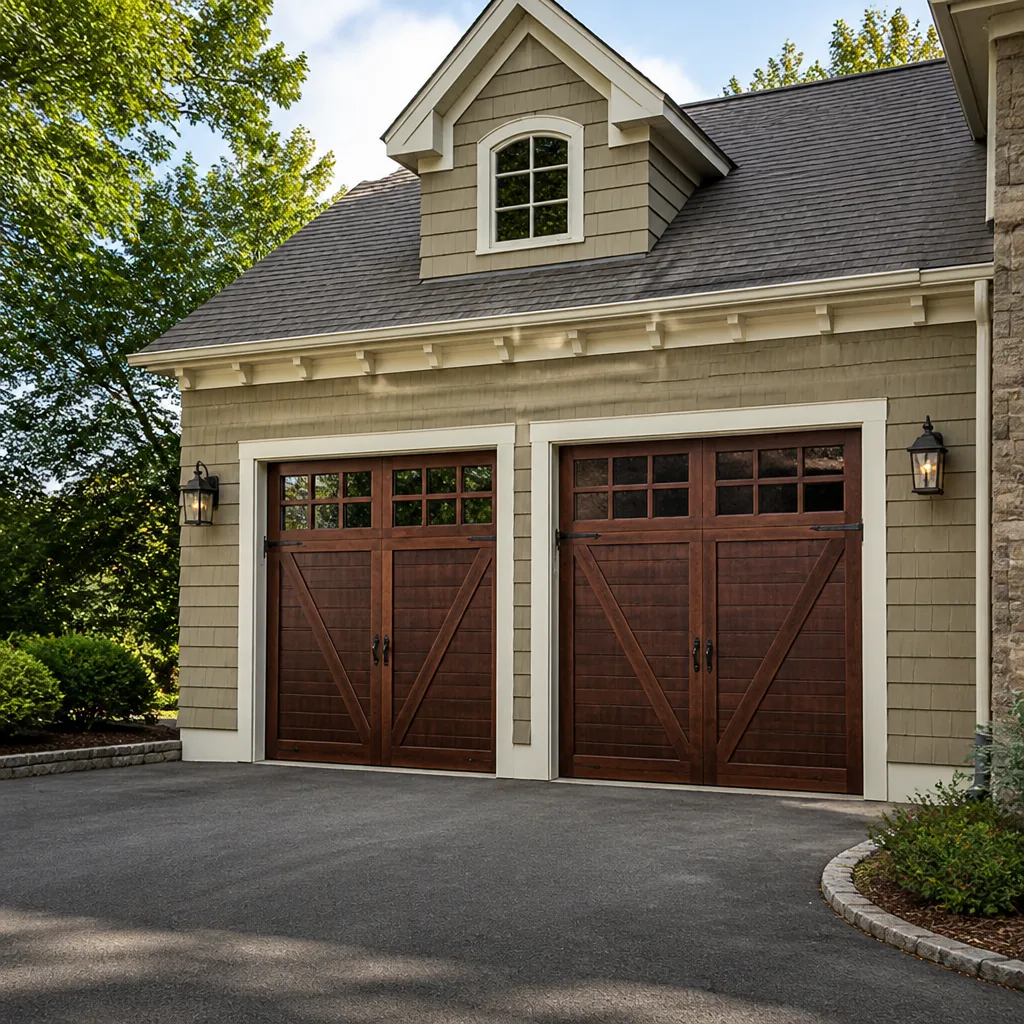 Carriage house
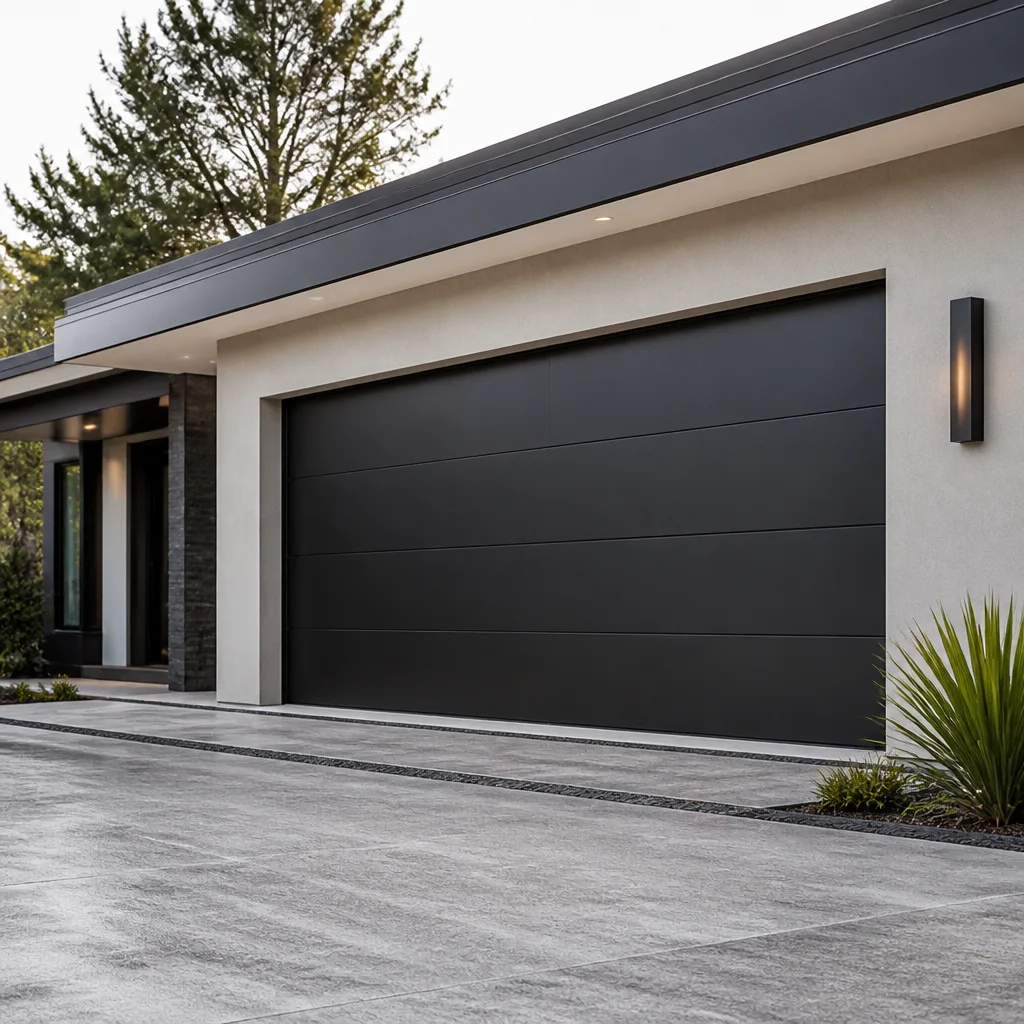 Modern flush
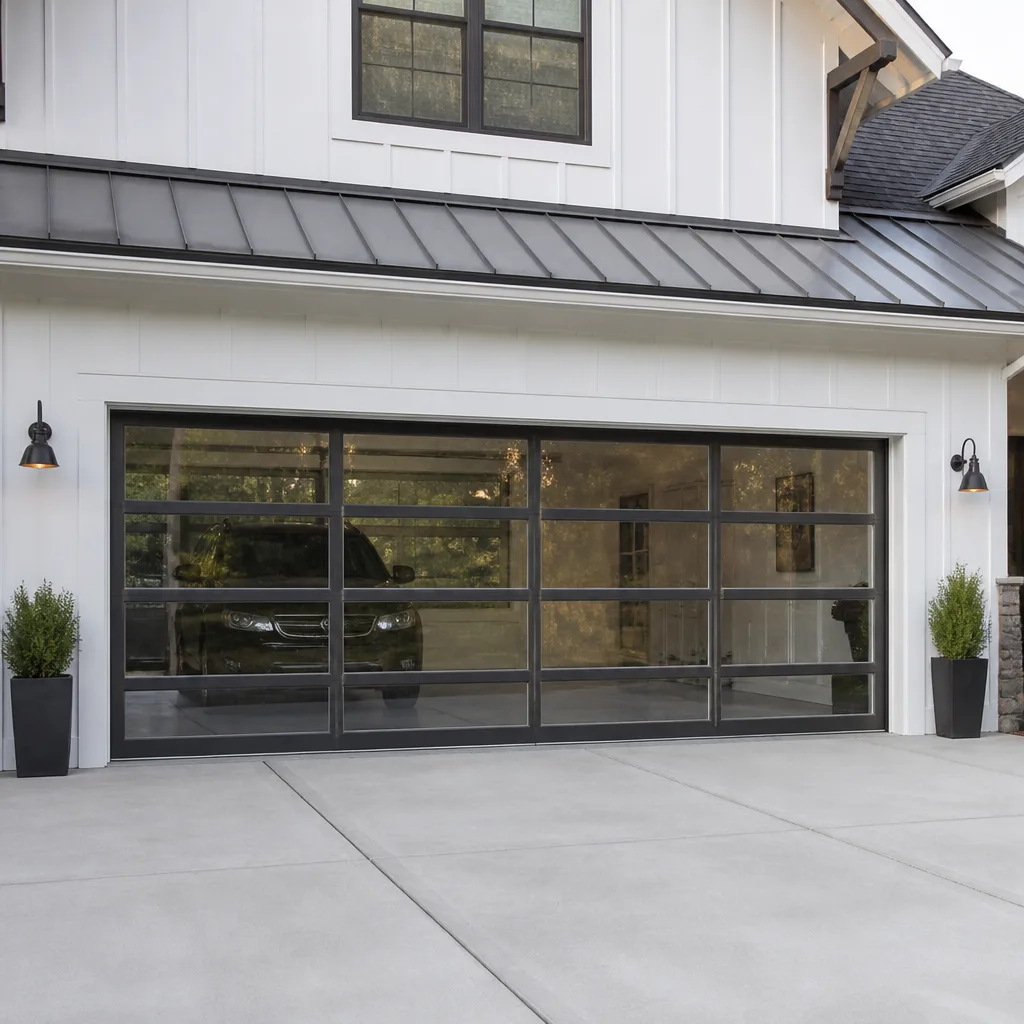 Full-view glass
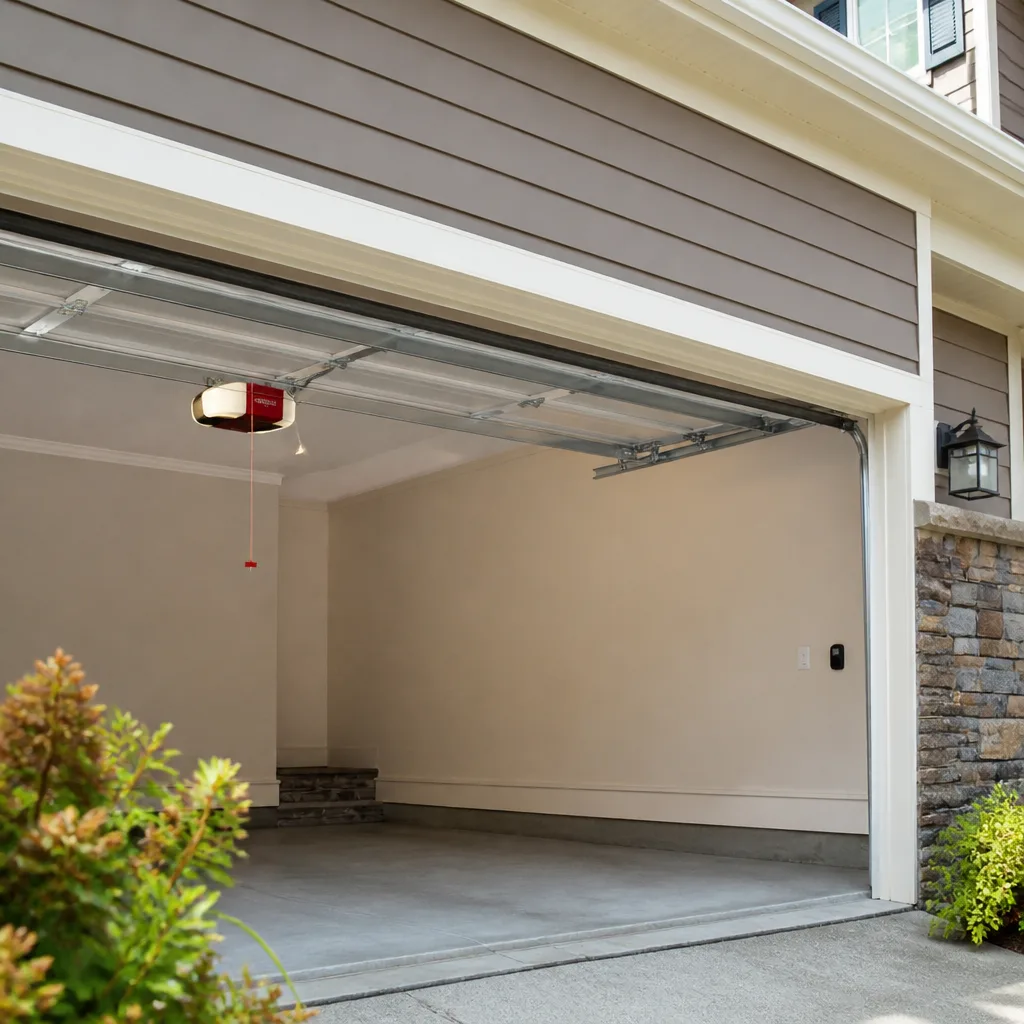 LiftMaster openers
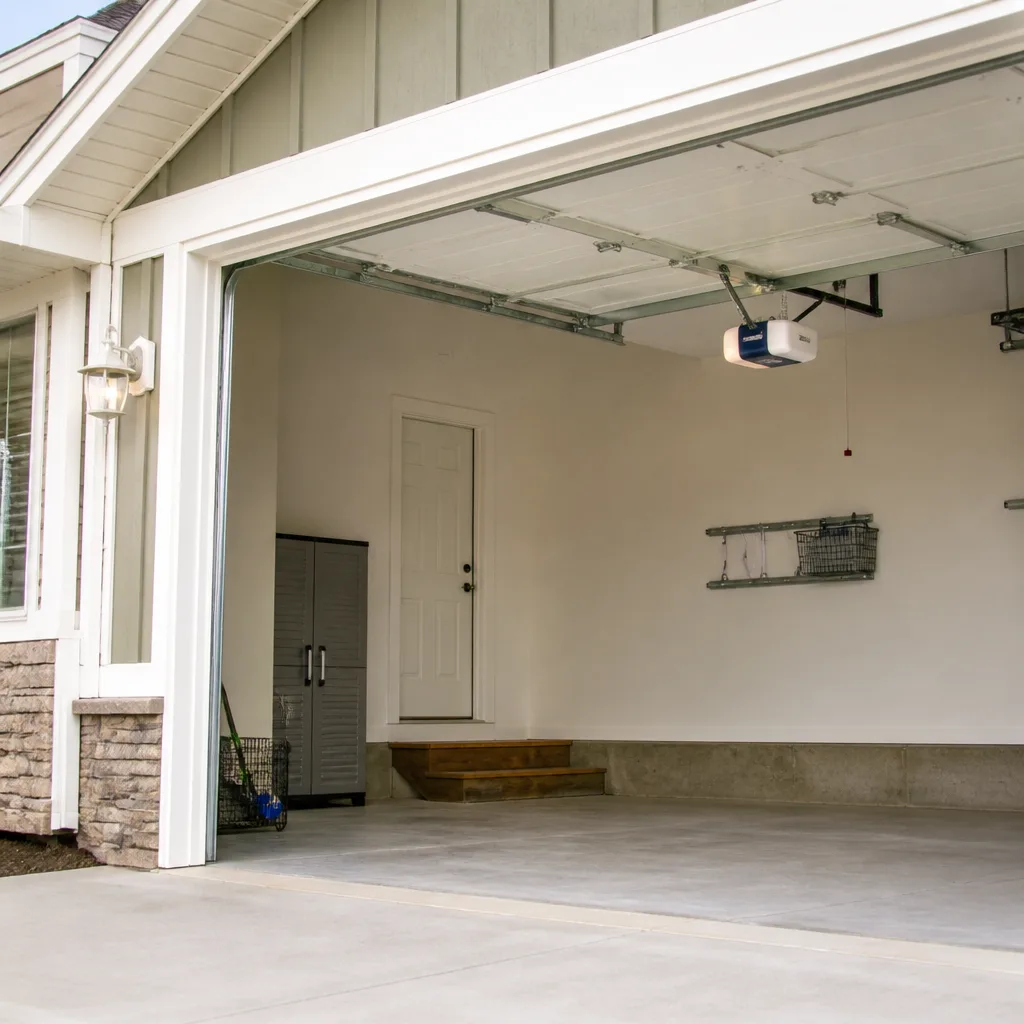 Chamberlain openers
Full 25-point door and opener safety check with every visit - springs, cables, rollers, tracks, and your LiftMaster or Chamberlain opener included
You get a price before we start. It does not change when the pro arrives.
Get your free estimateThe Complete Guide to Garage Doors in Hampden
Most garage door guides start with a 16-foot double door and work backward. In Hampden, that approach falls apart almost immediately. Much of the neighborhood’s housing stock was built for horse-drawn carriages, alley access, and tight lot lines, which means the door that fits your opening is often narrower, lower, or differently hung than the one every big-box store stocks by default. A standard double door simply won’t clear the posts on many Hampden rowhouse garages, and the headroom above a century-old carriage house opening rarely matches modern opener specs.
This guide maps the actual door configurations you’ll find in Hampden, MD to the hardware, service approach, and installation constraints that work with them. You’ll learn what to measure before you shop, which materials hold up to Baltimore’s freeze-thaw cycles, when a repair makes structural sense versus when the opening itself needs modification, and how the local housing stock shapes everything from spring type to opener placement. We work on what you already have, and this guide reflects that philosophy: understand the door first, then decide what it needs.
Quick Answer
The best garage door for a Hampden home depends on your opening’s actual width, headroom, and lot access, not on a standard size. Rowhouse garages here typically need single-car doors in the 8- to 9-foot range with low-headroom hardware, while detached carriage houses often require custom-fit wood or composite doors that respect the original opening. Before buying anything, measure the rough opening, confirm clearance for the door’s travel, and have a trained technician check that the framing can carry the door’s weight and spring load.
Styles & brands we work with
- Raised-panel steel
- Carriage house
- Modern flush
- Full-view glass
- LiftMaster openers
- Chamberlain openers
Table of Contents
- Why Width and Headroom Constraints Come First in Hampden
- Matching Door Styles to Hampden’s Housing Stock
- How Dense Lot Lines Affect Installation and Opener Placement
- Steel, Wood, or Composite: Materials for Hampden’s Climate
- Springs and Openers: What Actually Fails in Hampden Garages
- Repair or Modify the Opening? Making the Right Call
- How Garage Door Repair Hampden Approaches Your Door
- What Garage Door Work Typically Costs in Hampden
Why Width and Headroom Constraints Come First in Hampden
In most of the country, garage door sizing is a solved problem: you buy a 16-foot double or a 9-foot single and it fits. In Hampden, the opening comes first and everything else follows. The neighborhood’s rowhouse garages were built for cars that were narrower and shorter than anything on the road today, and the alleys that serve them were cut before anyone imagined a three-row SUV. That history has real consequences for what door you can install.
The constraints we see most often in Hampden fall into three categories:
- Width. Many rowhouse garage openings measure closer to 8 feet than the standard 9, and some carriage house openings are narrower still. A door that’s an inch too wide won’t hang, and one that’s undersized leaves gaps that let in weather and pests.
- Headroom. Low-clearance situations are common in older Hampden garages, where the ceiling sits close to the opening header. Standard torsion springs and track radii often won’t fit, which pushes the job toward low-headroom drums and modified track.
- Side room and back room. The door needs clearance at the sides for the track and at the back for the door to travel when open. Dense Hampden lots sometimes leave less than a foot of side room, which changes how the whole assembly is built.
Before you shop for a door, measure the rough opening at its narrowest point (not just the finished opening), check the headroom from the floor to the lowest obstruction, and note how much space the door has to travel into. If any of those numbers are unusual, the door has to be ordered to fit them. That’s the first step, not the last.
Matching Door Styles to Hampden’s Housing Stock
Hampden’s housing stock runs the gamut from working-class rowhouses to the old detached carriage houses tucked behind them, and each type has its own idea of what a garage door should look like. Choosing a door that clashes with the surrounding architecture is a real mistake here, because the neighborhood’s character is part of what makes a house desirable. The good news is that historically appropriate doesn’t have to mean less functional.
The three dominant configurations in Hampden:
- Rowhouse garages. These are typically single-car, often alley-facing, with tight openings and modest headroom. Sectional steel doors in a raised-panel or carriage-house style finish work well here; they’re light enough for the existing framing and can be ordered to fit unusual widths. Where the homeowner wants the look of the original, composite panels with a wood-grain finish deliver the visual without the maintenance.
- Detached carriage houses. These are the gems of the neighborhood, and they deserve a door that respects the original opening. Wood sectional doors and composite carriage-house designs with decorative hardware are the common choices. Some homeowners repair and preserve the original door rather than replace it, and we work with that whenever the structure allows.
- Newer alley-access builds. These go up with modern openings and are the easiest to fit with standard products. Steel doors and modern insulated sectional designs are typical, and the install is straightforward when the builder left proper clearances.
The rule of thumb: match the door’s visual style to the building’s architecture, then size it to the opening’s real dimensions. A Hampden rowhouse with a carriage-house-style steel door reads correctly from the alley; a mid-century replacement door on a century-old carriage house reads like a mistake.
How Dense Lot Lines Affect Installation and Opener Placement
Hampden’s dense lot lines create installation questions that don’t come up on larger suburban lots. When your garage shares a wall with a neighbor’s or sits hard against a fence, the space available for the door’s side tracks, the opener’s rails, and the technician’s access is genuinely limited. Getting this right at the measuring stage prevents an install that has to be rethought on the spot.
What dense lots change in practice:
- Side clearance for tracks. The vertical track on each side needs breathing room. In tight Hampden garages, we sometimes have to use low-profile track or shift the door slightly within the opening to make it work.
- Opener rail length. A ceiling-mounted opener needs back room behind the door’s travel path. If the garage is shallow, a wall-mounted jackshaft opener is often the better choice, and it also avoids the overhead rail entirely.
- Obstruction sensors. The safety sensors at the floor need a clear line of sight across the opening. Narrow lots sometimes leave one side blocked by stored items or the wall itself, and the sensors need to be mounted where they’ll actually see the full width.
- Alley access. Many Hampden garages open onto alleys rather than driveways, which affects how the door travels and what opener logic makes sense. Doors that face the alley often benefit from a smart opener you can control from inside the house without walking out.
This is where brand fluency matters. Working with LiftMaster and Chamberlain systems, we know how their rails and sensor kits behave in tight quarters, and we can match the right opener to the space rather than forcing a unit that doesn’t fit. Getting the opener right on a narrow Hampden lot is often more about the mounting than the model.
Steel, Wood, or Composite: Materials for Hampden’s Climate
Hampden’s climate is a four-season test: humid summers, hard freezes in winter, and the constant freeze-thaw cycling that comes with Baltimore’s position between the coast and the mountains. That cycling is the real enemy of garage doors here, because it works moisture into seams and joints and then expands and contracts them over and over. The material you choose should be judged on how it handles that cycle, not by how it looks in a showroom.
Here’s how the main options compare for Hampden:
- Steel. The workhorse choice for rowhouse garages. Steel sectional doors handle freeze-thaw well, especially with insulated cores, and they’re light enough for the older framing common in Hampden. The weak point is the bottom edge, which sits close to slush and road grit in winter; a good bottom seal and periodic inspection keep it sound. Craftsman and Clopay both make residential steel lines that hold up here.
- Wood. The right choice for carriage houses where the original door was wood and the architecture calls for it. Wood needs more care in this climate, particularly at the bottom rail and around the panel joints where moisture collects. Painting or staining on schedule and keeping the finish intact is what makes wood last. Families who love the look accept that maintenance schedule; families who don’t often choose composite.
- Composite. The middle path, and increasingly common in Hampden. Composite doors mimic wood visually while resisting moisture and rot, which suits the freeze-thaw cycle. They’re a good fit for owners who want a carriage-house look without the annual upkeep. They cost more than basic steel, less than custom wood, and they’re typically ordered to fit the opening.
Insulation is worth considering regardless of material. An insulated door helps stabilize the temperature in a garage used for storage or as a workspace, and it also deadens noise, which matters in a dense neighborhood. Hail isn’t a real concern here, but wind-driven rain and winter ice are, so the seals and bottom edge deserve as much attention as the panel material.
Springs and Openers: What Actually Fails in Hampden Garages
If you own a garage in Hampden long enough, one of two things will eventually fail: a spring or an opener. Understanding which part does what, and why the job on a Hampden door often differs from the same job elsewhere, helps you ask the right questions when you call for service.
The springs carry the door’s weight. Torsion springs sit above the door on a shaft; extension springs run alongside the tracks. When a spring breaks, the door suddenly becomes very heavy and may not open at all, or it may drop. Spring replacement is the most technically demanding repair in the trade, and it’s the one most often deferred or outsourced. The stored energy in a wound torsion spring is dangerous, and this is not a job for a homeowner with a pair of winding bars from a hardware store. A trained technician with the right tools and procedure handles it safely; the rest of us should not.
On older Hampden carriage houses and rowhouse garages, the spring setup is often non-standard. Low headroom sometimes rules out standard torsion; older installations may use extension springs that have outlived their safe service life. The right fix depends on the actual configuration, which is why we look before we quote.
The opener does the lifting after the springs do the work. When an opener fails, the symptoms vary: the door won’t move, it moves a few inches and reverses, the remote goes dead, or the motor runs but nothing happens. LiftMaster and Chamberlain smart openers are common in Hampden, and the connected features that make them convenient are also where problems often surface, whether it’s a WiFi module that drops or a safety sensor that goes out of alignment. Those sensor alignment issues come up constantly in tight Hampden garages where stored items nudge the sensors out of line.
The key point: spring and opener problems often look alike from the outside. A door that won’t open could be a broken spring, a dead opener, a sensor fault, or a track obstruction. Diagnosing it right, then fixing the actual cause rather than replacing parts by elimination, is the difference between a good repair and an expensive guess.
Repair or Modify the Opening? Making the Right Call
Not every problem in a Hampden garage is a garage door problem. Sometimes the door is fine and the opening isn’t: the header sags, the framing has shifted, the floor has settled and thrown the opening out of square. Putting a new door into a failing opening wastes the door and leaves the underlying problem in place. Knowing when a repair is enough and when the opening itself needs work saves money and frustration.
A repair is usually the right call when the door, springs, and hardware are sound and the failing part is a component: a snapped spring, a bent track, a frayed cable, a dead opener, a broken hinge or roller. These jobs restore the door to function without touching the structure, and in Hampden’s older garages, they’re often all that’s needed.
Modification of the opening becomes necessary when:
- The opening is out of square or the header is failing. A door installed into a crooked opening will bind, wear unevenly, and fail early. The framing needs attention first.
- The headroom can’t be made to work. If there’s no way to fit a torsion spring or a door’s travel into the existing space, the opening may need to be built out or the door configuration changed to make it possible.
- The width conflicts with the available door sizes. Where an opening is too wide or too narrow for any standard door, the framing may need adjustment before a door can be ordered.
- The original door was removed and the opening was sealed or altered. Some older Hampden carriage houses have openings that were modified over the years; reopening one means deciding what’s structurally sound before anything is installed.
The right sequence is: diagnose the door, then inspect the opening, then decide. That’s what a free estimate actually involves, and it’s the step that keeps an older garage from turning into a series of expensive surprises. Our garage door installation work always starts with that inspection, because the door isn’t the only thing that has to fit.
How Garage Door Repair Hampden Approaches Your Door
We work on what you already have. That’s the core of how we approach every Hampden door, and it shapes the whole job from the first call. If your door is serviceable, we’d rather repair it than sell you a replacement you didn’t need. If a replacement is the right call, we’ll tell you why and show you what we’re seeing in the opening. The brand doesn’t matter to us: we’re familiar with the system in your garage before we arrive, whether that’s a Craftsman opener someone installed years ago or a Raynor commercial-grade unit on a light-commercial property.
Our approach breaks down to a few principles:
- Brand-agnostic service. We work across the major door and opener brands: LiftMaster, Chamberlain, Genie, Clopay, Amarr, Wayne Dalton, Craftsman, and Raynor. That range means we can repair what you own rather than steer you toward a proprietary replacement.
- Spring repair in-house. Torsion and extension spring work is the highest-risk repair in the trade, and it’s often outsourced. We handle it ourselves, which keeps the job in one set of hands from diagnosis to finish.
- Full-scope coverage. Spring, opener, panel, or full door, one call covers it. From garage door opener repair through complete replacement, the job isn’t handed off partway through.
- Emergency response. A door that won’t close leaves a house open to weather and anything that wanders in. Emergency garage door service is a real service line for us, not a callback promise. If your door fails, call and we’ll respond as fast as we can.
- Familiar with your brand before we arrive. Knowing the common failure points on the major brands means we show up with a clear idea of what to check, which shortens the diagnosis and the whole job.
Our technicians have up to 15 years of experience, and that shows most clearly on the unusual doors: the low-headroom torsion setups, the century-old carriage house frames, the odd-width rowhouse openings. The door works or we’re not done.
What Garage Door Work Typically Costs in Hampden
Most garage door work in Hampden falls into a few predictable categories, and typical costs below are estimates for this neighborhood’s housing stock. The written estimate you receive after we look at the door is the actual price, and the number you’re quoted before any work starts is the number you’ll pay. Below is the general range of what each type of job usually runs, with the caveat that older Hampden openings and custom-fit carriage house doors sometimes need work that a standard job doesn’t.
| Service | Typical Estimated Range | Notes |
|---|---|---|
| Torsion spring replacement (one spring) | $180 – $340 | Matched pairs are usually replaced together at roughly double the price of one |
| Extension spring replacement | $150 – $280 | Common on older Hampden rowhouse and carriage house installations |
| Opener repair (per job) | $120 – $300 | Depends on the failure: sensor, motor, gear, board, or remote |
| New opener installation | $300 – $650 | Includes unit and labor; smart openers run at the higher end |
| Track or roller repair | $150 – $400 | Low-profile track work common in tight Hampden garages |
| New door installation (standard single) | $900 – $2,200 | Ordered to the opening; custom widths and carriage house styles run higher |
What drives a Hampden job toward the higher end: unusual widths that require a door ordered to fit, low-headroom setups that need special hardware, and carriage house frames where the opening has to be inspected or adjusted before a door can go in. A free estimate is the step that turns any of these ranges into a firm number. For a more detailed breakdown of repair costs, our garage door repair page covers common failures and what each typically involves. The ranges above are estimates only; the written quote is the price.
Common Mistakes to Avoid
- Buying a standard 16-foot door for a rowhouse garage. The opening is probably 8 or 9 feet, and the door won’t fit. Measure the real rough opening before anything is ordered.
- Assuming headroom is fine because the door opened once. Low headroom is common in older Hampden garages, and standard hardware may clear at rest but bind during travel. The measurement needs to happen before the door is chosen.
- Attempting your own spring replacement. A wound torsion spring stores enough energy to cause serious injury. This is the one repair that belongs to a trained professional every time, without exception.
- Choosing a door for looks alone on an older carriage house. The door has to match the opening’s actual dimensions and carry weight the framing can support. A beautiful door that doesn’t fit leaves you back at the measuring stage.
- Replacing an opener when the springs are the real problem. The door’s weight is carried by springs; the opener only lifts. If the door is heavy or won’t stay up, a new opener won’t fix it.
- Skipping the opening inspection on an older Hampden garage. Putting a new door into a sagging or out-of-square opening causes premature wear. Diagnose the opening first, then buy the door.
- Letting the bottom seal go. Winter slush and grit work their way into the bottom edge of the door and stay there. A worn seal accelerates rust and rot, and it’s a cheap fix that prevents an expensive one.
See the difference
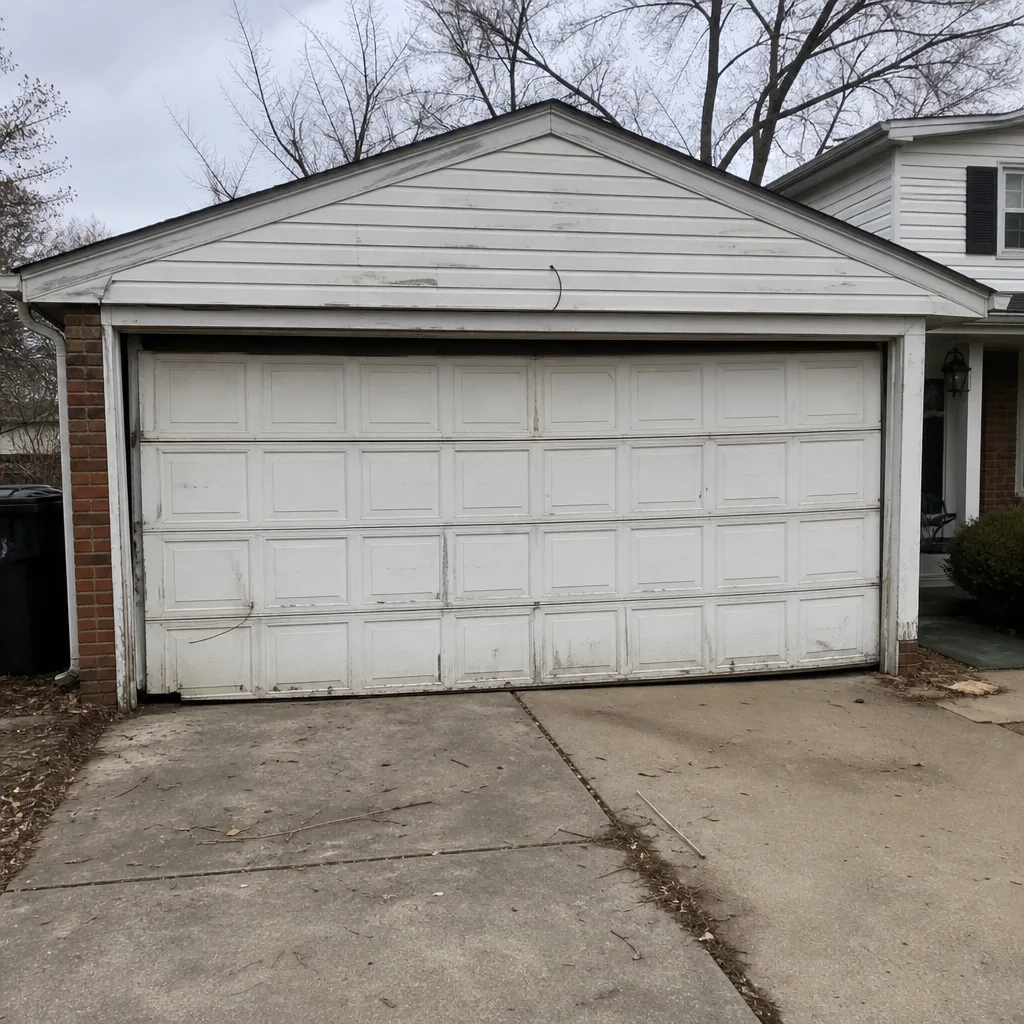 Before
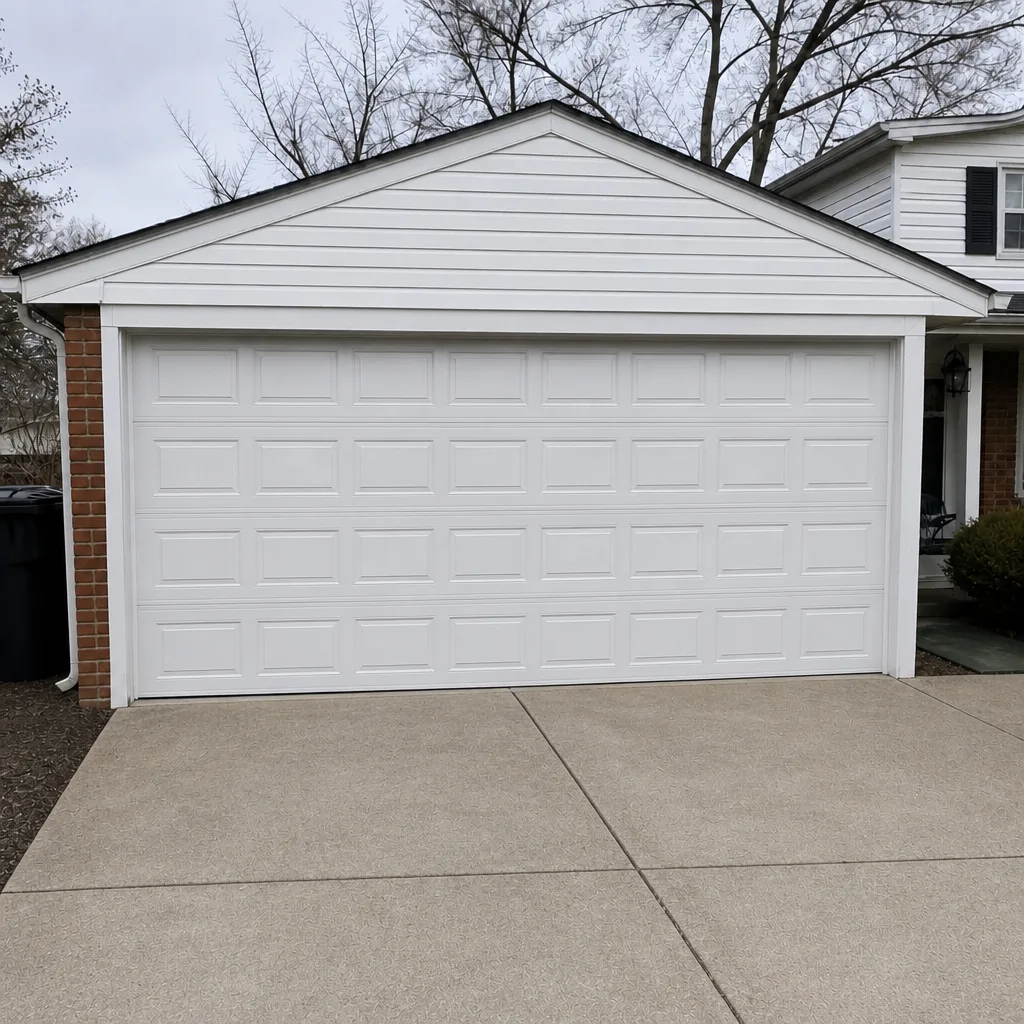 After
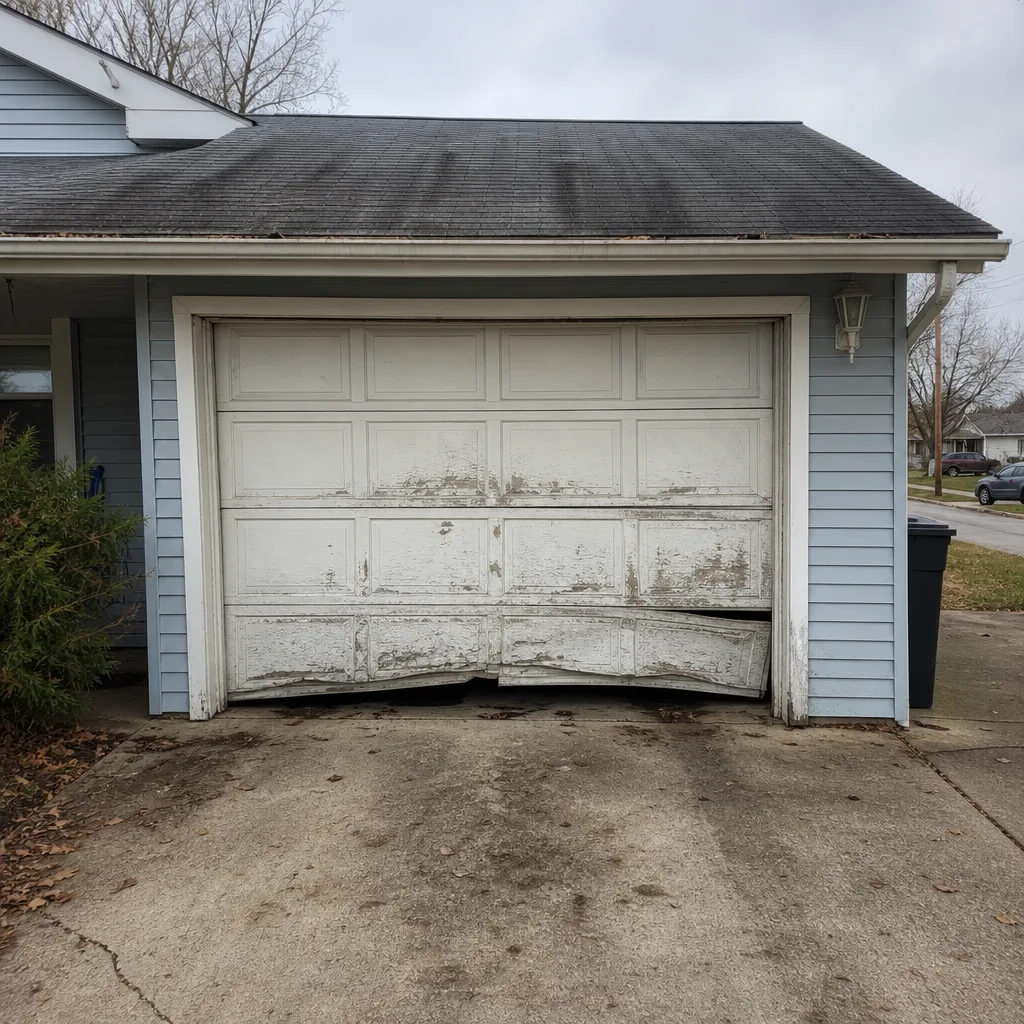 Before
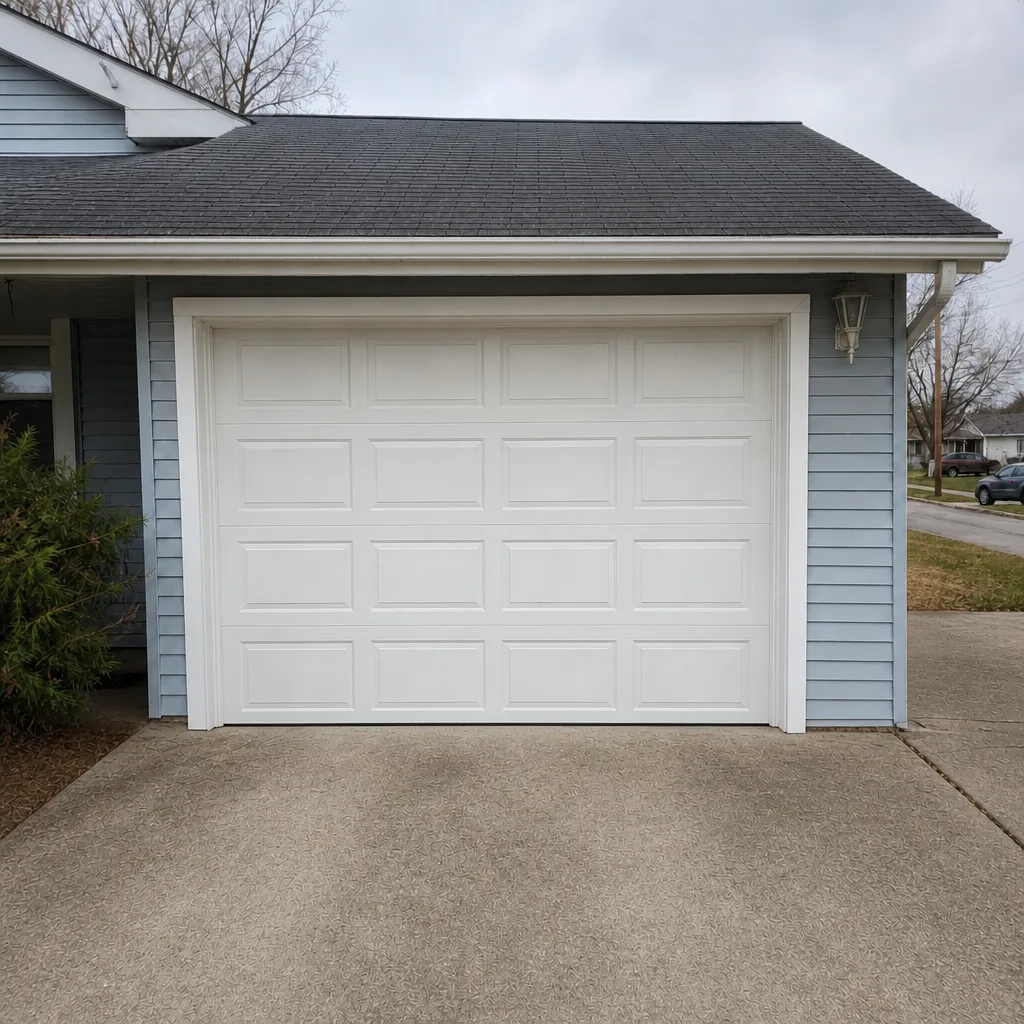 After
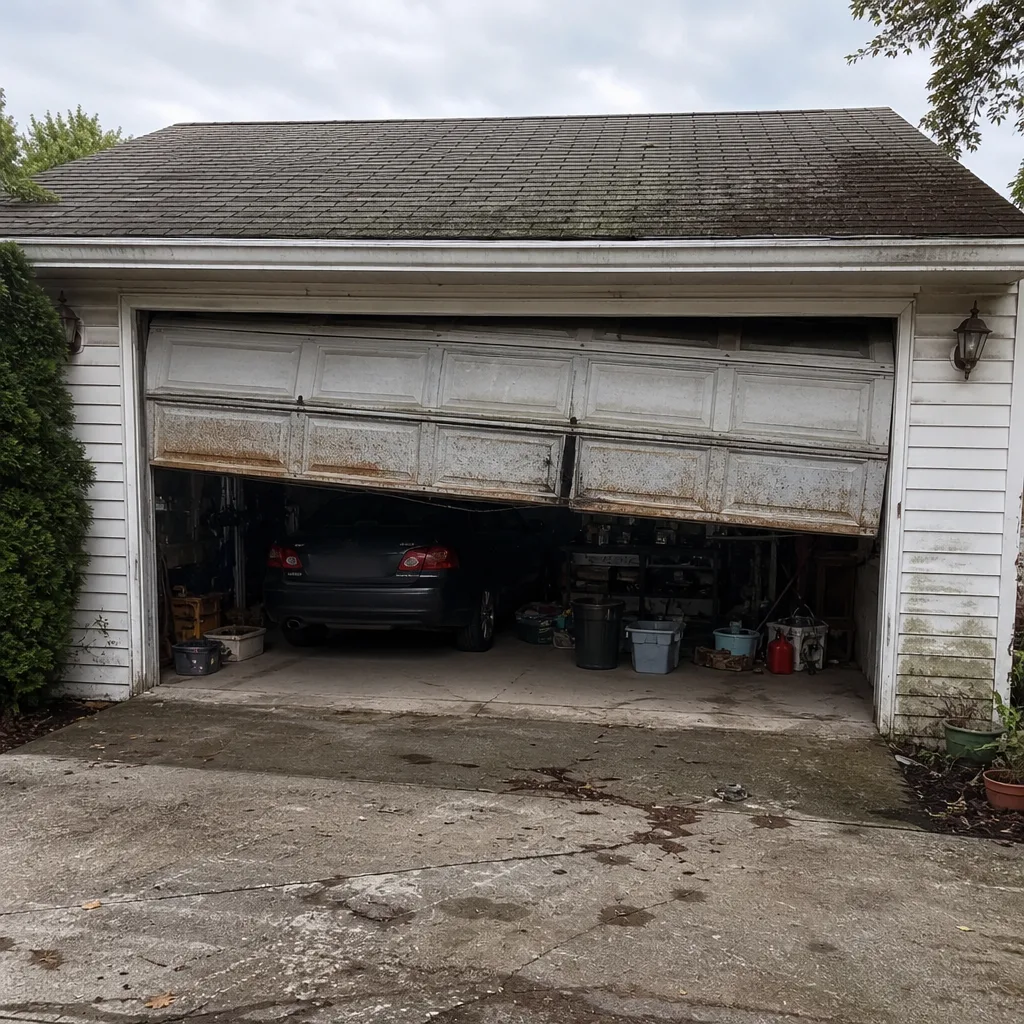 Before
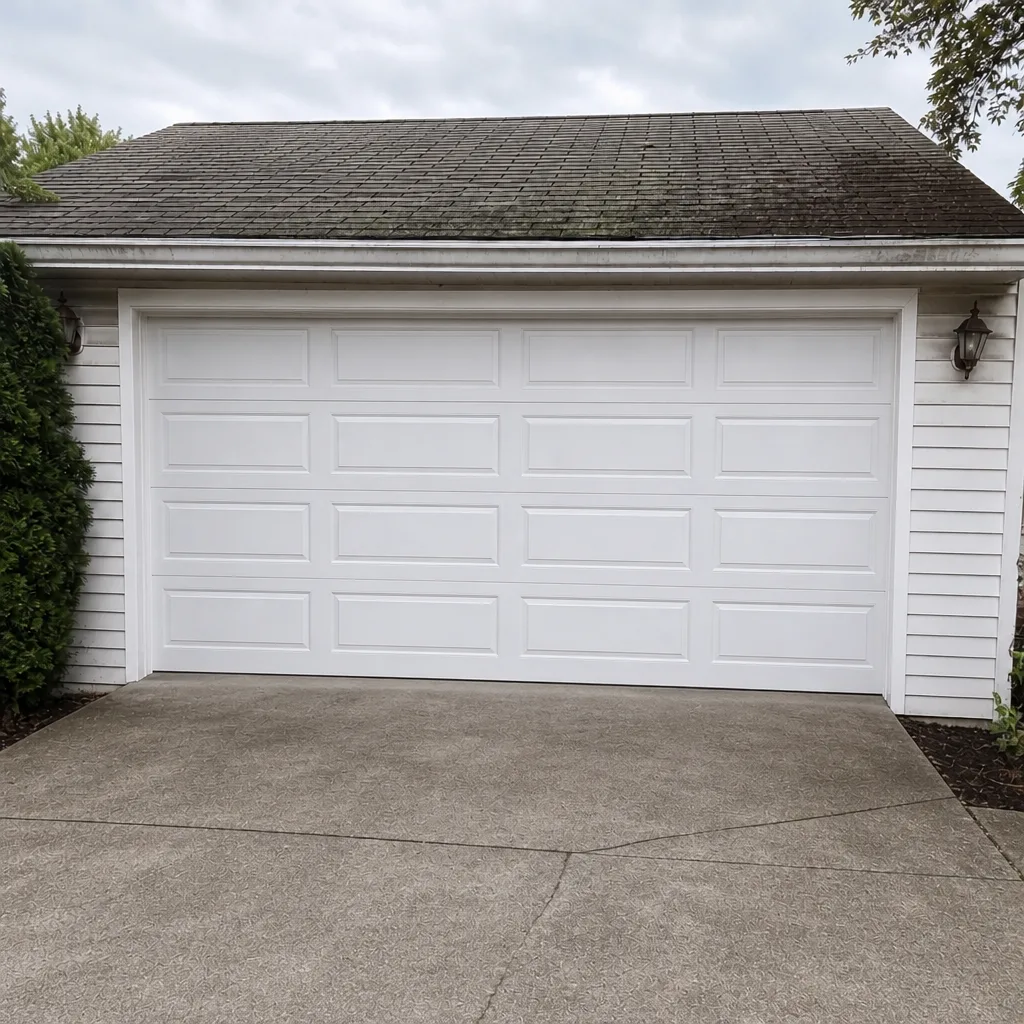 After
When to Call a Professional
Some garage door problems genuinely need a trained technician: a broken or stretched spring, a frayed or fallen cable, a door that’s come off its track, a bent section, a door that’s left partly hanging, or an opener that’s moving the door but ripping the brackets loose. Anything involving a wound spring or a cable under tension is a same-call situation. Beyond the safety issues, it’s also worth calling when a repair has been attempted and the door still doesn’t work correctly, since repeated fixes usually mean the diagnosis was wrong and the part you replaced wasn’t the failing part.
The other clear call: when a door fails to close. A garage that won’t seal is a security and water problem, and in Hampden’s tight alley-facing lots it’s a visible one. Garage Door Repair Hampden offers free estimates in Hampden, so an inspection and a written price come before you commit to anything. Call (855) 552-9470 to set one up, and we’ll tell you what the door needs.
Frequently Asked Questions
Most Hampden rowhouse garages take a single-car door between 8 and 9 feet wide, often narrower than the 9-foot standard, and the headroom usually rules out standard torsion hardware. Measure the rough opening at its narrowest point and check the headroom before ordering. A door ordered to fit the opening is the only reliable approach on a rowhouse lot.
A single spring typically runs $180 to $340, and because matched pairs are usually replaced together, a pair runs roughly double that. The written estimate sets the final price before any work begins. Call (855) 552-9470 for an exact quote; estimates are free.
Same-day and emergency service is genuinely available, not a callback promise, so a door that won’t close should be called in as soon as it happens. The sooner you call, the faster we can get a technician out. Call (855) 552-9470 and we’ll move on it.
Repair first if the door and its frame are structurally sound. Many original carriage house doors in Hampden can be restored with new springs, hardware, and a refinish rather than replaced. Where the door itself is beyond saving, composite carriage-house styles can be ordered to fit the original opening while keeping the look the architecture calls for.
No. The quote you agree to before any work starts is the price, and the written estimate is the number we stand behind. If a hidden issue turns up during the job, we discuss it with you and get your agreement before doing anything that changes the price.
Yes. We work across the major brands, including LiftMaster, Chamberlain, Craftsman, Genie, Raynor, Wayne Dalton, Clopay, and Amarr, so we’re familiar with your system before we arrive. That means repair rather than pressure to replace. Call (855) 552-9470 for an estimate.
The Bottom Line
Garage doors in Hampden are a fit problem before they’re a shopping problem. The opening comes first: its width, its headroom, its side and back clearance, and the condition of the framing around it. Once those are measured and the opening is sound, the door, springs, and opener can be chosen to match both the building and the job. Steel suits the rowhouse garages; wood and composite suit the carriage houses; low-headroom hardware and wall-mounted openers solve the tight lots. Springs and openers will fail eventually, and the spring is the one repair to always hand to a professional. Get the measurement right, get a written estimate, and the rest follows. Call (855) 552-9470 for a free estimate on your Hampden garage door.
Written by the team at Garage Door Repair Hampden.